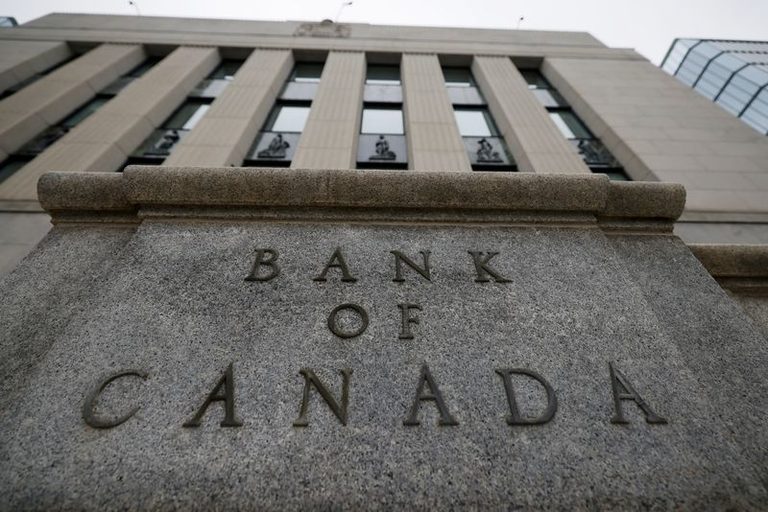
Ottawa – The Bank of Canada is widely expected to leave its key policy rate unchanged at 2.25% when it meets on Wednesday. Recent data show the Canadian economy expanding at a 3.3% annualized pace in the second quarter, outpacing the bank’s 2.5% forecast, while inflation has nudged up to the top of the central bank’s 1‑3% target range.
Strong growth meets trade uncertainty
Export volumes surged and domestic demand held firm, helping business investment and household spending rebound. However, that momentum arrived just before President Donald Trump’s administration imposed 50% tariffs on roughly $20 billion of Canadian goods. Canada responded with retaliatory duties that are set to take effect next week, adding a new layer of risk to the outlook.
Why the bank may stay the course
Randall Bartlett, deputy chief economist at Desjardins Group, warned that “the risks are evolving, the risks are broadening,” but added that they remain “broadly balanced around inflation.” He argued that moving rates now would be premature, as the full impact of the tariff changes on growth and prices is still unclear.
Headline inflation rose to 3% in July, driven largely by higher gasoline prices, while core inflation measures linger near the 2% target. Higher energy costs and the new tariffs could push inflation upward, yet weaker export demand and a potential slowdown in business investment might dampen price pressures.
Market expectations and labor market backdrop
All 35 economists surveyed by Reuters anticipate no change to the policy rate, and money‑market pricing reflects a roughly 94% probability of a hold. The labor market also shows signs of strength, with the unemployment rate falling to a two‑year low of 6.4% in July after a series of robust job gains, though the rate remains relatively high by historical standards.
Analysts caution that the Q2 rebound was partially fueled by a restart of previously halted auto‑plant production, higher oil prices, government support measures, and the excitement surrounding the Soccer World Cup, which Canada co‑hosted.
What’s next?
The Bank of Canada will announce its decision at 9:45 a.m. ET (1345 GMT). Policymakers will be watching closely to see whether the trade dispute with the United States translates into lasting inflationary pressure or a slowdown in growth. For now, the central bank appears poised to let the data speak before taking any pre‑emptive action.
Original reporting: Appleton, WI News Feed (HLL/CB) — read the source article.