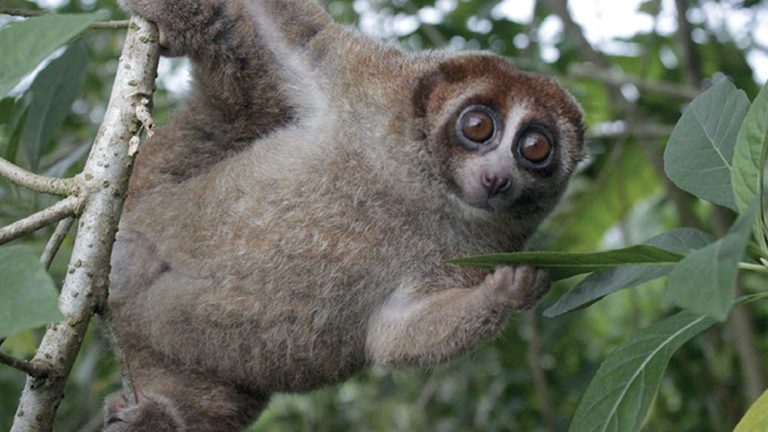
Recent findings confirm that the Bangka slow loris, a small venomous primate once listed as possibly extinct, continues to survive on Indonesia’s Bangka Island. Researchers citing records from the Alobi Wildlife Rescue Center reported that more than 90 individuals have been rescued since 2015, with 86 subsequently released back into their natural habitat.
Rescue data reveals ongoing presence
The rescue center’s logs show a steady flow of encounters. Since 2021, 43 lorises were rescued, including 16 found inside homes or gardens, six recovered from roadways, and seven bearing burns consistent with electric shock. Officials noted that the animals were “hiding in plain sight,” underscoring how closely they live alongside human communities.
Conservation status and threats
The International Union for Conservation of Nature (IUCN) last recorded a sighting of the Bangka slow loris in 1937, classifying it as critically endangered and possibly extinct. The new evidence challenges that assessment, though scientists caution that the exact population size remains unknown and the survival rate of released animals is still being evaluated.
Habitat loss remains the greatest threat. Extensive tin mining, expanding palm oil plantations, and new settlements have fragmented the forest that the lorises depend on. Researchers stress that protecting remaining forest patches is essential for the species’ long‑term viability.
Recommendations for future action
Study authors recommend three key steps: first, reassessing the IUCN “possibly extinct” designation in light of the new data; second, implementing systematic habitat protection and monitoring programs; and third, establishing a captive‑breeding initiative to bolster the population and support future re‑introductions.
Like other slow loris species, the Bangka slow loris possesses a venomous bite, mixing a secretion from elbow‑adjacent glands with saliva. While this trait is unusual among primates, it poses no direct threat to humans when the animals are handled responsibly.
Local and global significance
The discovery offers hope for conservationists worldwide, illustrating that species presumed lost can persist when dedicated rescue and monitoring efforts are in place. It also highlights the importance of community awareness, as many lorises were found near homes, suggesting that local residents can play a role in protecting these unique primates.
Continued collaboration between wildlife rescue organizations, government agencies, and international conservation bodies will be vital to ensure that the Bangka slow loris moves from the brink of extinction toward a stable future.
Original reporting: WPBF (Treasure Coast / Hearst) — read the source article.