On a weekday afternoon, the storefront on Whalley Avenue sits quieter than you’d expect for a place that’s been repairing and selling stringed instruments since 1986. No foot traffic spilling out the door, no line out front. From the sidewalk, it reads more like a repair shop than a destination. That impression lasts about thirty seconds past the threshold.
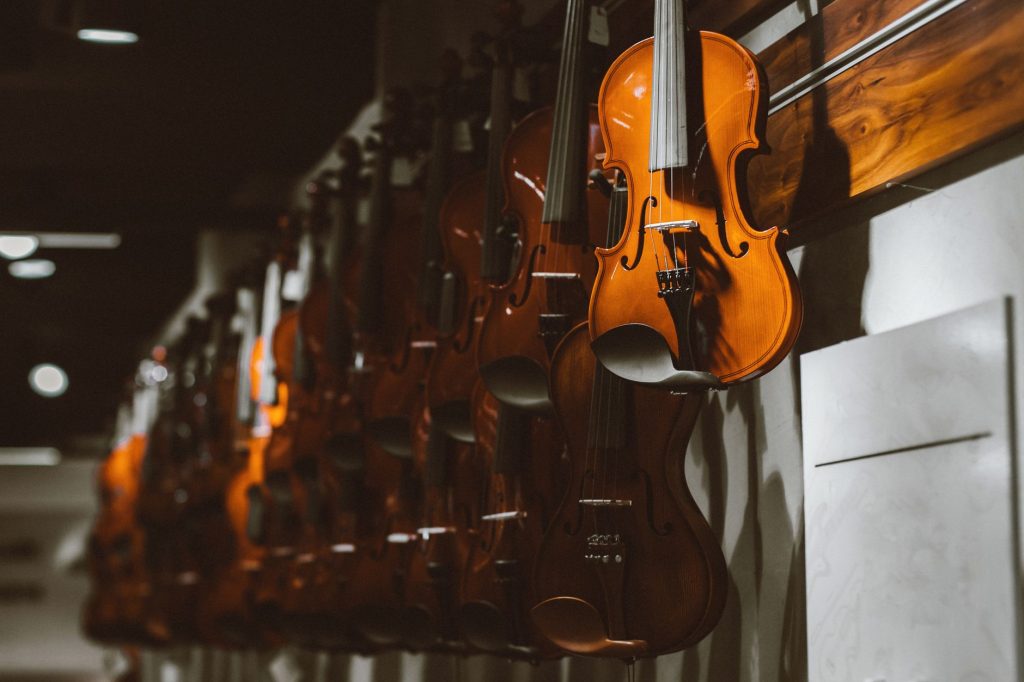
Dixon’s Violin occupies a building that’s older than most of its clientele, and the interior looks it — in the good way. Instruments hang from the walls and ceiling in dense, overlapping rows: violins, violas, cellos, the occasional double bass leaning in a corner. The smell is workshop specific, rosin and old wood and finish. Behind the counter, someone is usually bent over something, bow in hand or tool in hand. The shop does serious repair work, and that function defines the whole place. This is not a showroom dressed up as a studio.
What surprises most first-timers is the price range. There are student instruments here, the kind a sixth-grader starting orchestra would actually use, alongside professional-grade instruments that run well into the thousands. A decent rental can be arranged for under twenty dollars a month. Outright purchases start around a hundred for a basic beginner setup and climb from there depending on what you’re after. Staff will tell you plainly what the difference is between a two-hundred-dollar violin and a seven-hundred-dollar one, and they won’t push you toward the higher shelf if you don’t need it.
The repair side of the operation is what keeps working musicians coming back. Bow rehairing, crack repair, seam work, new bridges — Dixon’s does all of it, and has done it for long enough that New Haven Symphony players and Yale music students both know the address. Turnaround on routine work tends to be reasonable, though it’s worth calling ahead on anything complicated. The shop isn’t trying to be quick-service; it’s trying to be correct.
What Dixon’s is not: a music lesson studio, a performance space, or a café attached to a record store. It’s a violin shop. That specificity, in a city that’s spent the last decade layering experience and atmosphere onto every retail concept it can find, turns out to be its own kind of draw. You go to Dixon’s because you need something done to an instrument, or because you’re ready to buy one, or because you want to look at what’s hanging on the wall and ask questions without anyone upselling you on a workshop series.
Whalley Avenue runs southwest from downtown through Dwight and into Westville, and Dixon’s sits along that corridor in a stretch that’s more neighborhood hardware store than boutique district. Parking on the street is generally findable. The shop keeps standard business hours, closed Sunday, and it’s worth double-checking hours if you’re making a specific trip. No appointment needed for browsing or asking about repairs, though dropping off anything significant is easier if you call first.
New Haven has a lot of music. Yale’s music school is a few minutes away, the symphony plays regularly, and there are enough working local musicians that instrument repair isn’t a niche concern. Dixon’s has spent nearly four decades being the place those people go. That’s not something you arrive at with marketing.