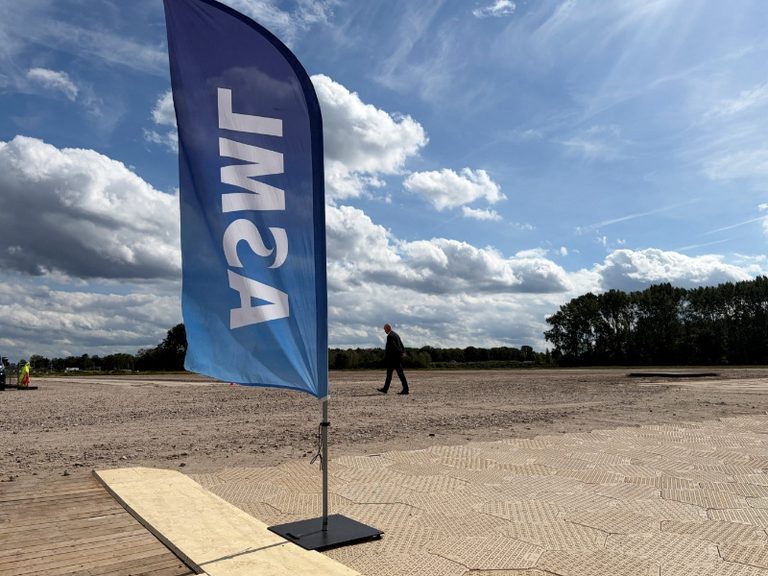
ASML, the Dutch leader in semiconductor lithography, broke ground on a new production facility in Eindhoven last week, signaling a major boost to its manufacturing capacity. CFO Roger Dassen told Reuters that the surge in artificial intelligence demand has dramatically improved customer sentiment, with many asking for faster delivery of the next‑generation tools.
Strong demand for High NA lithography
The company’s current line of extreme ultraviolet (EUV) machines, each priced around $200 million, are essentially sold out through 2027. At the same time, customers are rapidly committing to the newer High NA (numerical aperture) systems, which cost roughly $400 million per unit. Dassen described a recent conversation with a major client: “Can you give me more? Can you give it to me fast?”
Industry giants TSMC, Samsung and SK Hynix have all set dates to begin using High NA tools in production, while Intel, an early adopter, reports that the machines already meet its throughput and reliability standards. TSMC, which supplies chips for Apple and Nvidia, had initially questioned whether the higher price was justified, but now plans to deploy the technology starting in 2030.
Technical advantages and market impact
High NA lithography can print features about 40 % smaller than standard EUV systems, potentially reducing manufacturing steps and increasing overall productivity. Although the equipment costs roughly twice as much as previous generations, the ability to produce finer chip features is expected to sustain performance gains as the industry continues to shrink transistor sizes.
JPMorgan estimates that ASML held a 94 % share of the global lithography market in 2025, and the company enjoys a monopoly on EUV technology that has persisted since the late 2010s. Competing firms such as Japan’s Nikon and Canon, as well as emerging Chinese players, still rely on older deep‑ultraviolet platforms and are not positioned to challenge ASML’s dominance in the high‑end segment.
Industry confidence despite cost concerns
Some analysts had wondered whether the market would adopt High NA widely enough to recoup development costs. InsingerGilissen analyst Jos Versteeg dismissed those doubts, noting that there is “no alternative” to ASML’s technology for the most advanced chips. Samsung plans to start memory‑chip production with High NA tools in 2028, earlier than many had expected, while SK Hynix has made a similar commitment for the same year. Micron has placed orders but has not yet announced a production timeline.
Intel, the first customer to integrate High NA into high‑volume manufacturing, recently processed more than one million wafers using the new tools. CEO Christophe Fouquet emphasized that the threshold for memory manufacturers to adopt High NA is lower because their chips are smaller, leading to “more aggressiveness” in adoption plans across the sector.
Looking ahead
The combination of a new production plant, robust order backlog, and growing commitments from the world’s leading chipmakers suggests that ASML will continue to dominate the lithography market well into the 2030s. As AI applications expand and demand for ever‑more powerful processors grows, the company’s technology will remain a critical enabler for the semiconductor ecosystem.
Original reporting: Appleton, WI News Feed (HLL/CB) — read the source article.