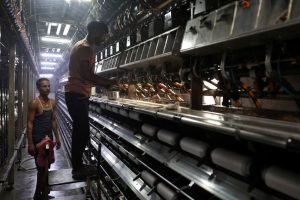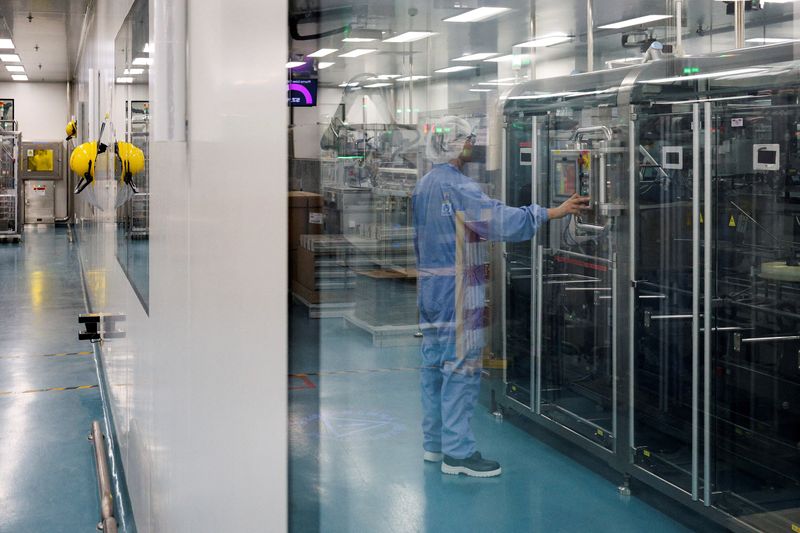
In response to the ongoing conflict in the Middle East, Asian factories have ramped up production, with many companies stockpiling goods to buffer against potential supply chain disruptions. This strategic move has led to a notable expansion in factory activity across the region in May, according to private surveys.
Impact of Middle East Conflict
The conflict, particularly involving the U.S.-Israeli war on Iran, has strained global energy supplies and affected vulnerable economies. The Strait of Hormuz, a crucial passage for oil and gas shipments, has been a focal point of concern, prompting businesses to secure their supply chains.
In South Korea, factory activity reached its highest level since March 2021, driven by a surge in demand for artificial intelligence-related investments. The country’s Purchasing Managers’ Index (PMI) rose to 54.8 in May, up from 53.6 in April, as firms sought to lock in supplies amid shipping disruptions.
Regional Manufacturing Trends
Japan’s factory activity also showed growth, with a PMI of 54.5 in May, although it slowed slightly from April’s high. The rise in input costs, attributed to increased raw material prices due to the Middle East conflict, was noted as a challenge for Japanese manufacturers.
China’s manufacturing sector continued its expansion for the sixth consecutive month, with a PMI of 51.8 in May. This was slightly better than analysts’ expectations and above the threshold indicating growth. However, an official survey indicated that new orders in China contracted, and input costs continued to rise.
Elsewhere in Asia, India’s manufacturing sector expanded at its fastest pace in three months, with a PMI of 55.0 in May. Vietnam and Taiwan also reported growth in their factory activity, with PMIs rising to 52.8 and 56.1, respectively.
Artificial Intelligence Driving Demand
The artificial intelligence boom has been a significant factor in sustaining factory activity in Asia. South Korea’s exports, particularly in the semiconductor sector, grew at their strongest annual pace in over four decades, driven by record chip sales to support AI investments. This trend is expected to continue, with increasing AI spending in both the U.S. and China fueling demand for Korean goods.
Overall, the strategic stockpiling by Asian manufacturers highlights their proactive approach to mitigating risks associated with the Middle East conflict, ensuring stability in their operations despite global uncertainties.
Original reporting: Appleton, WI News Feed (HLL/CB) — read the source article.