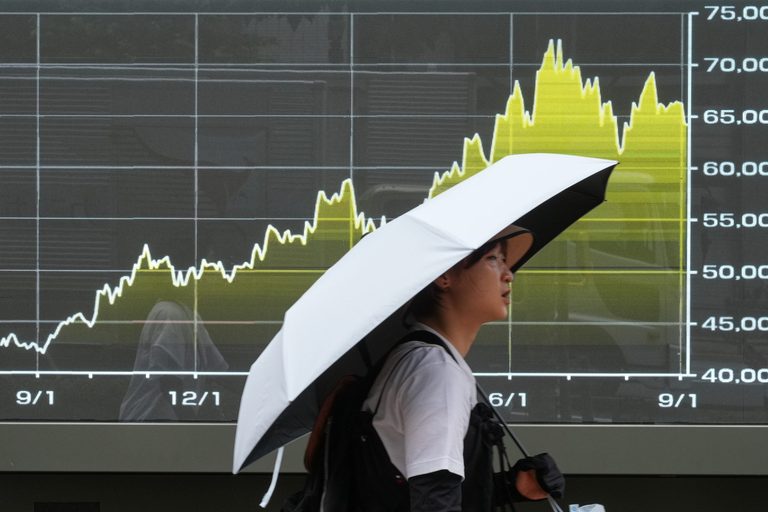
Asian equity markets posted mixed results on Monday, but the biggest highlights came from Japan and South Korea, where technology stocks led the charge. The Nikkei 225 climbed 1.7% to 66,104.93, and South Korea’s KOSPI jumped 3.3% to 6,907.53, driven largely by a rally in computer chipmakers.
Chipmakers power the gains
Shares of Samsung Electronics rose 4.5%, while memory‑chip specialist SK Hynix surged 6.2%. Both companies are key suppliers of the semiconductors that power artificial‑intelligence (AI) applications, a sector that analysts say is providing the most reliable growth pulse for regional markets.
“The AI complex continues to provide the local equity markets with its most dependable growth pulse,” said Stephen Innes, a former trader, commenting on the broader trend. He added that despite concerns about valuations, the hardware trade remains resilient and is “firmly in the leadership seat.”
Other Asian markets lag
Not all indices shared the optimism. Hong Kong’s Hang Seng index slipped 1.1% to 25,377.12, and the Shanghai Composite fell 0.2% to 3,920.70. The divergence reflects differing exposure to the tech sector and varying investor sentiment across the region.
Energy and geopolitical backdrop
In the commodities arena, Brent crude rose 67 cents to $96.95 a barrel after the United States reported an escalation in its six‑month conflict with Iran. The U.S. military denied Iranian claims that an uncrewed American vessel was struck in the Strait of Hormuz, labeling the accusation a “total lie.” Meanwhile, a senior Iranian official warned of an upcoming “exclusion zone” around the strait, following recent U.S. strikes on three Iranian oil tankers and Tehran’s launch of ballistic missiles at U.S. warships.
U.S. benchmark crude also edged higher, gaining 61 cents to $92.09 a barrel.
U.S. market context
U.S. equity markets were closed on Monday for the Labor Day holiday. They had ended the previous week lower after the Labor Department reported an unexpected addition of 162,000 jobs in August, a figure that could increase the likelihood of the Federal Reserve raising interest rates later this month.
On Friday, the S&P 500 fell 0.4%, the Dow Jones Industrial Average slipped 0.5%, and the Nasdaq Composite gave back 0.3%. Market participants expect the Fed to raise rates before year‑end to cool inflation, which remains well above the 3% target. The next policy meeting is scheduled for September 16, with the Fed’s official inflation goal set at 2%.
Bond yields and currency moves
U.S. Treasury yields, which had eased last week, rose on Friday as investors digested the jobs data. The 10‑year yield increased to 4.78% from 4.77%, a level that influences mortgage rates.
In foreign‑exchange markets, the U.S. dollar was largely unchanged at about 156.22 Japanese yen. The euro slipped to $1.1609 from $1.1621. The weakening yen continues to be a concern for Japanese policymakers, though it has rebounded after briefly reaching the 160‑yen level against the dollar.
“The stronger‑than‑expected U.S. employment report generated only a limited recovery in the dollar, suggesting the market is responding more to the Bank of Japan’s policy outlook,” said Linh Tran, a market analyst at XS.com.
Outlook
Analysts expect the AI‑driven semiconductor sector to remain a key catalyst for Asian equity performance, especially as global demand for AI hardware accelerates. Investors will be watching upcoming policy meetings at the Bank of Japan and the Federal Reserve for clues on interest‑rate trajectories that could affect currency and bond markets.
Original reporting: Alexandria, VA News – WTOP News — read the source article.