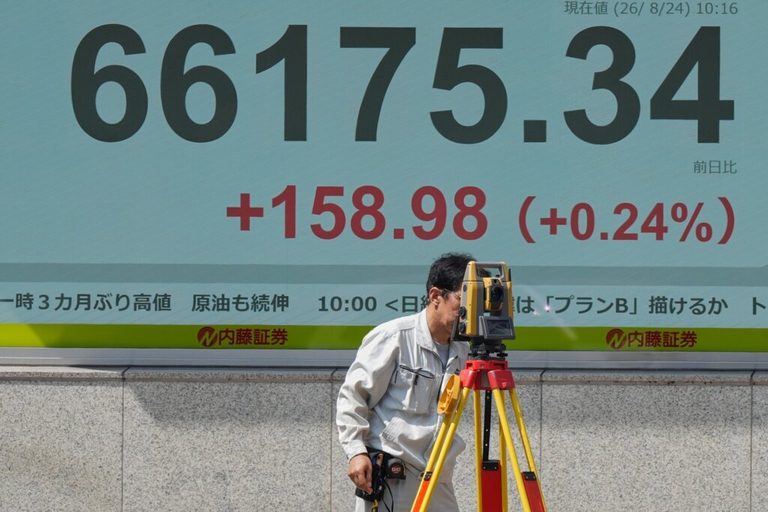
Asian equity indexes opened lower on Monday, reflecting heightened sensitivity to rising US Treasury yields and upcoming inflation data. In Tokyo, the Nikkei 225 slipped 0.5% to 65,678.45, while South Korea’s Kospi fell 3.5% to 6,664.36. Hong Kong’s Hang Seng dropped 2.1% to 25,465.23 and Shanghai’s Composite gave up 0.7% to 3,877.30. Taiwan’s Taiex also slipped 0.5%.
Australia’s S&P/ASX 200 bucked the regional trend, gaining 0.5% to 9,107.40, but the broader Asian picture remained bearish as investors priced in higher borrowing costs for US consumers.
US inflation data and bond market pressure
Wednesday will bring a crucial US inflation update when the Bureau of Economic Analysis releases its July personal consumption expenditures (PCE) report, the Federal Reserve’s preferred gauge. The PCE has consistently shown consumer inflation running above the Fed’s 2% target, lingering near 3%.
The Federal Reserve has struggled to bring inflation back to target since early 2025, when a series of tariffs and the early‑2026 Iran‑related oil disruptions pushed price pressures higher. Last week, rising yields forced the Treasury Department to intervene, announcing a doubling of long‑term bond buybacks in an effort to lower the 10‑year Treasury yield and mortgage rates. Despite the move, the 10‑year yield rose back to 4.73% on Friday, matching its highest level in more than a year, and was at 4.71% early Monday. The 30‑year yield also climbed, nearing its highest point since 2007.
Jackson Hole conference
Investors will be watching Federal Reserve Governor Kevin Warsh’s remarks at the annual Jackson Hole Economic Policy Symposium later this week for clues on future rate policy. The conference gathers top US and global economic officials, and any signal of a more aggressive stance on inflation could further pressure bond markets.
Higher yields tend to slow economic growth and can dampen demand for risk assets, including equities and commodities. The bond market’s volatility has already contributed to a modest decline in oil prices, with Brent crude falling 1.4% to $93.10 per barrel and US benchmark crude down 1.6% to $85.63.
US equity markets
On the US side, the S&P 500 rose 0.4% for only its second gain in six days after hitting an all‑time high last week. The Dow Jones Industrial Average jumped 1%, and the Nasdaq Composite climbed 0.4%. Strong spring earnings from many companies have helped lift US stocks, but the lingering uncertainty over inflation and bond yields remains a headwind.
Cryptocurrency markets also responded to the Treasury’s bond‑buyback announcement, with Bitcoin trading near $77,000, as lower rates often boost demand for digital assets.
Currency movements
The US dollar weakened slightly against the Japanese yen, buying 158.89 yen compared with 158.94 the previous Friday. The euro held steady at $1.1678.
Overall, the combination of higher US yields, pending inflation data, and the upcoming Jackson Hole speeches creates a cautious backdrop for Asian markets, which are likely to remain volatile until clearer signals emerge from US policymakers.
Original reporting: Alexandria, VA News – WTOP News — read the source article.