As the U.S. stock market continues to reach new heights, a significant portion of Americans are tightening their belts in response to ongoing inflation and elevated gas prices. Recent surveys indicate that two-thirds of Americans are reducing their spending, highlighting a disconnect between stock market performance and everyday financial realities.
Consumer Confidence Declines
The Conference Board’s consumer confidence index saw a slight decline of 0.7 points to 93.1 in May, marking the first drop after three months of improvement. This index, which has struggled to recover to pre-pandemic levels, reflects a broader sentiment of caution among consumers. Before the COVID-19 pandemic, the index regularly reached 130, indicating much higher consumer confidence.
Similarly, the University of Michigan’s consumer sentiment index fell to a record low of 44.8 in May. This decline underscores the impact of rising costs on personal finances, as many Americans report that inflation is outpacing their income growth, reducing their purchasing power.
Economic Inequality and Spending Habits
Economists point to a “K-shaped” economic recovery, where higher-income households benefit from rising stock prices and continue to spend, while lower-income families face financial strain. The latest consumer confidence survey revealed that confidence grew among households earning $100,000 or more, but declined for most others.
Ben Ayers, a senior economist at Nationwide, noted that the prospect of higher prices and faster inflation is prompting many households to adopt a more cautious approach to spending. Despite some positive signs, such as improved expectations for growth six months ahead, the outlook on the job market has worsened slightly.
Impact of Rising Prices
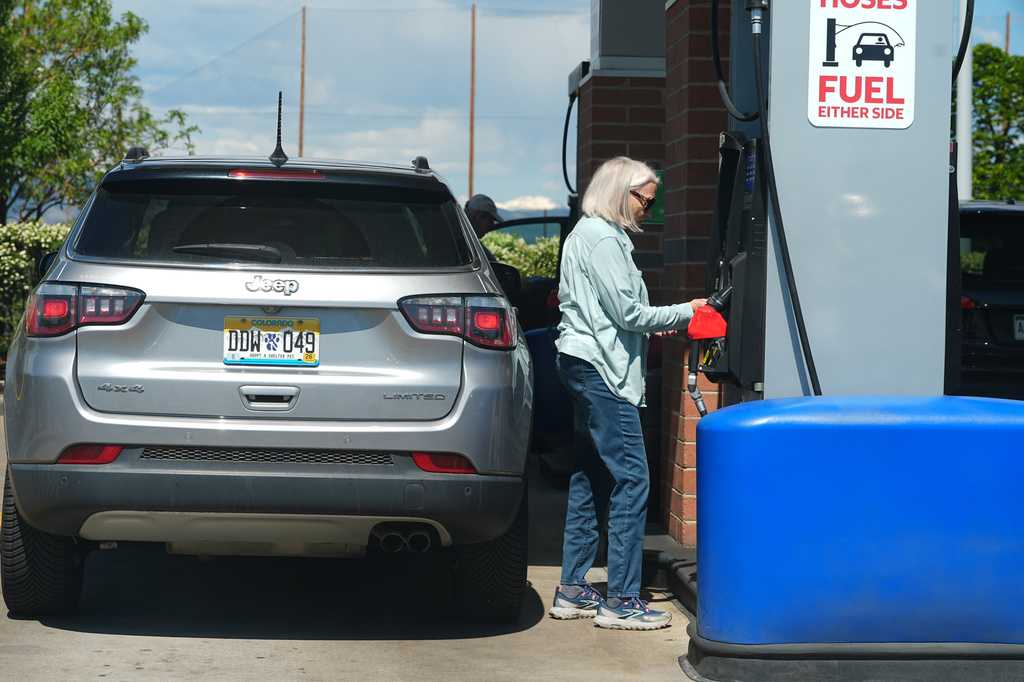
Gas prices have surged to a national average of $4.49 per gallon, significantly higher than the $2.98 average before the onset of the Iran war in February. This increase, coupled with rising grocery and beef prices, has led many Americans to alter their spending habits. The Conference Board’s survey found that two-thirds of respondents are cutting back on overall purchases and delaying major acquisitions.
Inflation reached 3.8% in April, the highest in three years, driven by increased shipping costs and reduced cattle herds due to drought. As a result, inflation-adjusted incomes have decreased, and retail sales, when adjusted for inflation, declined in April after a strong March.
These economic challenges are influencing consumer behavior, with many planning to economize on clothing, shoes, and leisure items. As Americans navigate these financial pressures, the gap between stock market performance and everyday economic realities remains a point of concern.
Original reporting: 40/29 / KHBS (NW Arkansas) — read the source article.