As the United States celebrates Independence Day, the nation reflects on more than two centuries of innovation that began with the Declaration of Independence from Britain in 1776. American inventors have created technologies that transformed agriculture, communication, transportation, medicine, and daily life.
Early American Inventions
One of the earliest major post-independence inventions came in 1793 when Eli Whitney, a Yale graduate working in Georgia, developed the cotton gin. The machine mechanized the separation of cotton seeds from fiber, a process previously done by hand. Whitney received a patent for his invention on March 14, 1794.
In 1876, Scottish-born American inventor Alexander Graham Bell received a patent for the telephone. On March 10 of that year, Bell transmitted the first intelligible words over wire to his assistant: “Mr. Watson, come here, I want to see you.” Bell’s invention revolutionized long-distance communication.
Thomas Edison and his team in Menlo Park, New Jersey, developed a commercially viable incandescent light bulb in 1879. Edison filed for a patent on November 4, 1879, and received U.S. Patent 223,898 on January 27, 1880, for an improved electric lamp with a carbon filament.
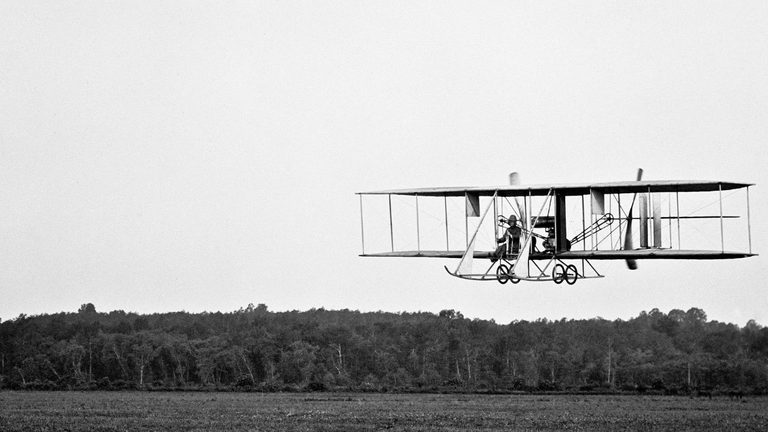
On December 17, 1903, at Kitty Hawk, North Carolina, Orville and Wilbur Wright achieved the first controlled, sustained, powered flight of a heavier-than-air aircraft. The Wright brothers’ achievement, developed through systematic experimentation in Ohio and North Carolina, launched modern aviation.
In the mid-20th century, American medical researcher Dr. Jonas Salk developed the first successful polio vaccine. Announced in 1955 after extensive testing, including on Salk himself and his family, the inactivated polio vaccine (IPV) became widely available.
Original reporting: The Dallas Express — read the source article.