As the United States celebrates Independence Day, the nation continues a tradition of innovation that has accelerated dramatically since the mid-20th century. From the foundations of the internet to breakthroughs in medicine and navigation, American inventors and researchers have created technologies that transformed how the world communicates, computes, travels, and heals.
Revolutionary Inventions
In 1969, the U.S. Department of Defense’s Advanced Research Projects Agency (ARPA) launched ARPANET, the first operational packet-switching network and direct precursor to the modern internet. The first successful message was sent on October 29, 1969, between UCLA and Stanford Research Institute. This Defense Department-funded project revolutionized global communication and information sharing.
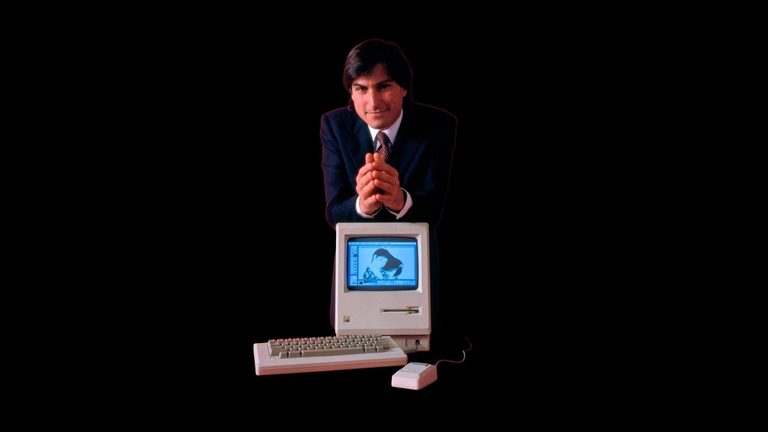
In the 1970s, American companies and innovators helped bring computing to individuals. Key milestones include the Altair 8800 (1975) and Apple’s early machines, with IBM’s PC in 1981 and Microsoft’s software playing major roles in widespread adoption. The shift from room-sized mainframes to desktop and personal computers transformed business, education, and daily life, democratizing access to information processing and laying the groundwork for the digital economy.
Developed by the U.S. Department of Defense, the first GPS satellite was launched in 1978, with the full constellation operational by the mid-1990s. Originally a military navigation system, it became available for civilian use in the 1980s–2000s. GPS fundamentally changed transportation, logistics, mapping, and emergency response.
American chemist John B. Goodenough, along with collaborators M. Stanley Whittingham and Akira Yoshino, developed the modern rechargeable lithium-ion battery. Goodenough’s breakthrough in the 1980s identified key cathode materials that dramatically increased energy density and safety. This technology revolutionized portable electronics, enabled the rise of smartphones and laptops, and became the foundation for electric vehicles and large-scale renewable energy storage.
In 2007, Apple, under Steve Jobs, introduced the iPhone, combining a mobile phone, internet communicator, and media player into one touchscreen device. Building on earlier mobile phone technology (including Motorola’s 1973 demonstration), the iPhone popularized the modern smartphone. This invention reshaped communication, entertainment, commerce, and social interaction, creating the app economy and putting powerful computing in billions of pockets worldwide.
American biochemist Jennifer Doudna and her collaborator Emmanuelle Charpentier developed CRISPR-Cas9, a revolutionary gene-editing tool. Their breakthrough paper was published in 2012, enabling precise DNA editing. CRISPR has transformed medicine, agriculture, and biological research, offering potential cures for genetic diseases and advancing treatments for conditions like sickle cell disease.
Artificial Intelligence
Foundational work in artificial intelligence emerged in the United States in the mid-1950s, highlighted by the 1956 Dartmouth Conference organized by American computer scientist John McCarthy, who coined the term “artificial intelligence.” Decades of research by American scientists and institutions have driven major advances in machine learning, neural networks, and modern AI systems. AI is now used in medical diagnostics, autonomous vehicles, language translation, scientific research, and countless other applications, fundamentally changing how machines assist and augment human capabilities.
Original reporting: The Dallas Express — read the source article.