BEIJING — In a bold move to cement China’s standing in the global AI race, Alibaba Group disclosed on Tuesday that it intends to develop a new artificial‑intelligence model containing between five trillion and ten trillion parameters. The announcement came alongside the launch of the company’s latest AI processor, the Zhenwu V900, which Alibaba claims is the most powerful chip produced in China to date.
Massive model, massive ambition
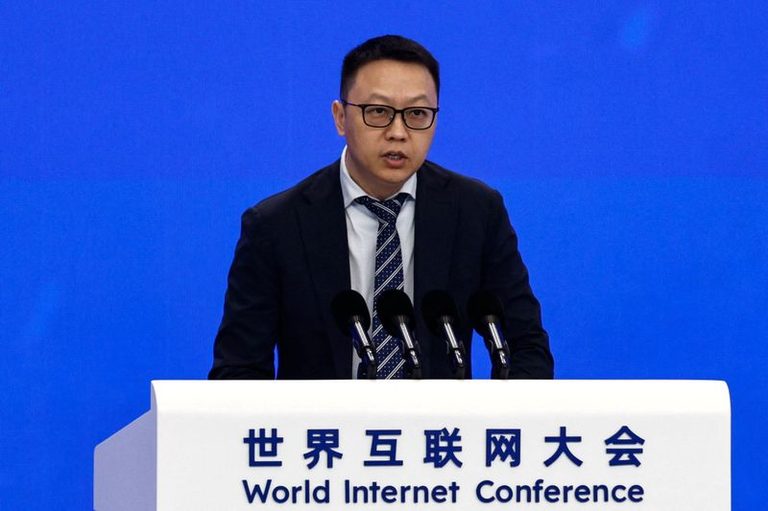
Chief Executive Eddie Wu explained that the forthcoming model will dwarf most existing systems, positioning Alibaba among the very few firms capable of training models at this scale. “Our goal is to push the boundaries of what AI can achieve for businesses and consumers,” Wu said. The model’s size—five to ten trillion parameters—places it well above the 175‑billion‑parameter GPT‑3 model that powers many current applications.
New chip promises three‑fold performance boost
Accompanying the model announcement, Alibaba unveiled the Zhenwu V900 AI chip. According to the company, the V900 delivers three times the performance of its predecessor, the Zhenwu V800, while maintaining energy efficiency suitable for large‑scale data‑center deployment. The chip is designed to accelerate both training and inference workloads, reducing the time required to develop and run sophisticated AI services.
Data‑center power goals
Alibaba also outlined an aggressive expansion plan for its cloud infrastructure. The firm aims to increase Alibaba Cloud’s global data‑center capacity to exceed 20 gigawatts by 2032, a target that reflects the growing demand for AI‑driven services across industries such as finance, healthcare, and manufacturing. Wu emphasized that the expanded capacity will support not only the new AI model but also a broader suite of cloud offerings for customers worldwide.
Implications for the tech landscape
The announcement underscores China’s determination to compete with U.S. tech giants in the AI domain. By investing heavily in both software (the massive model) and hardware (the Zhenwu V900), Alibaba seeks to reduce reliance on foreign chip manufacturers and create a vertically integrated AI ecosystem. Analysts note that such scale could accelerate the rollout of AI‑enhanced products, from intelligent assistants to advanced data‑analytics platforms.
Industry reaction
Industry observers praised the technical ambition but cautioned that building and operating models of this magnitude will require substantial capital and talent. “The sheer compute needed for a multi‑trillion‑parameter model is staggering,” said a senior analyst at a Beijing research firm, who asked for more details on the energy consumption and cooling solutions Alibaba plans to employ.
Nevertheless, the Zhenwu V900’s claimed performance leap has been welcomed by Chinese chip manufacturers, who see the product as a milestone in domestic semiconductor development. The chip’s introduction may also spur competition among other Chinese cloud providers to accelerate their own AI hardware roadmaps.
Looking ahead
Alibaba’s dual focus on AI model size and home‑grown processing power signals a long‑term strategy to dominate the AI services market. As the company works toward its 2032 data‑center capacity goal, the tech community will be watching closely to see how these investments translate into real‑world applications and whether they can narrow the gap with Western AI leaders.
Original reporting: Appleton, WI News Feed (HLL/CB) — read the source article.