The Alaska LNG project is at the forefront of the state legislature’s current 30-day special session. Governor Dunleavy has introduced a new 22-page bill, SB 2001, which aims to overhaul the tax structure for the project. This follows a previous, more complex proposal that had expanded to 52 pages during the regular session.
New Tax Structure Proposal
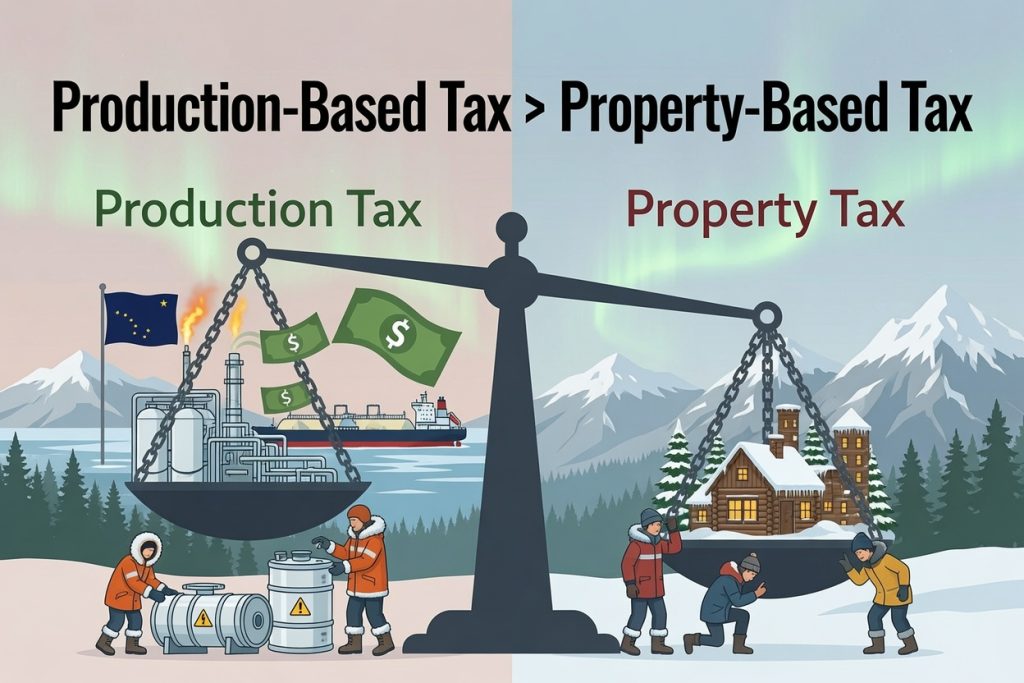
SB 2001 seeks to replace the existing property tax with an alternative volumetric tax (AVT) tied to project performance. Governor Dunleavy emphasized that this shift is intended to reduce upfront costs and uncertainty, while addressing local community impacts, revenue allocation, labor stability, and in-state energy access.
The debate centers on whether the project’s producers should continue to pay property taxes. Some argue that a property tax abatement unfairly benefits corporate oil and gas companies, while others believe the current tax structure makes the project financially unviable. Nicholas Fulford, a senior director at GaffneyCline and the Senate’s LNG consultant, testified that a property tax abatement is crucial for attracting investors.
Details of SB 2001
SB 2001 proposes that the property tax abatement will end when the project reaches a throughput of 500 million cubic feet of natural gas per day or after five years from the project’s start, whichever comes first. Given current production levels, it is likely that the five-year mark will be reached first. After this period, producers will revert to the existing property tax structure.
During the property tax abatement period, the AVT will apply immediately upon production. The AVT rates are set at $0.06 for a gas pipeline component, $0.12 for a gas treatment plant and carbon capture facility component, and $0.12 for a liquefied natural gas plant component, with a unit defined as 1,000 cubic feet of natural gas. This means producers could pay up to $60 million per day in taxes during the abatement period.
The AVT is designed to be performance-based, meaning that taxes will increase with higher production levels, aligning the interests of corporate producers with the benefits to Alaskans.
Original reporting: Must Read Alaska (Anchorage) — read the source article.