Senate Resources Chair Cathy Giessel called the joint House and Senate Resources Committee to order Thursday afternoon to focus on a single, critical issue: Cook Inlet gas supply. Representatives from Hilcorp Alaska, HEX Energy and Chugach Electric Association testified, while BlueCrest Energy was absent.
Hilcorp’s winter outlook
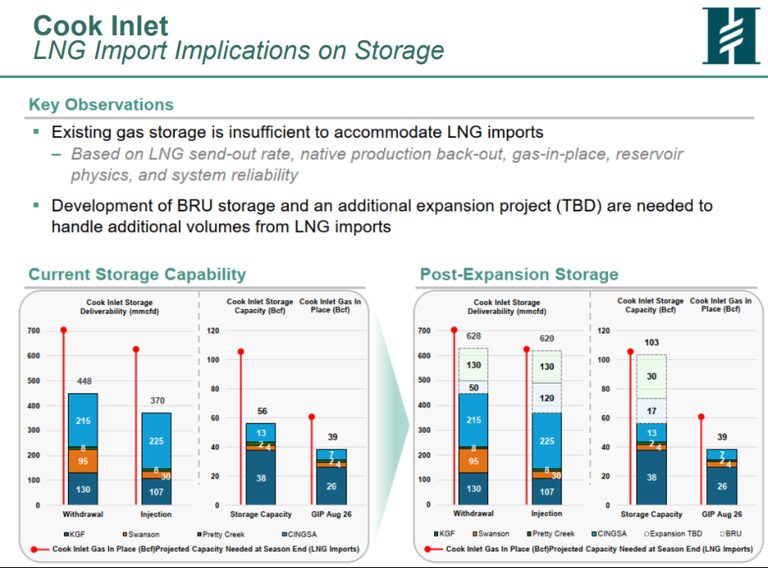
Hilcorp senior vice president Luke Saugier testified that the company will meet every contract it has signed and that roughly 30 billion cubic feet (Bcf) of gas sits in its Pool Six storage facility, ready for delivery to ENSTAR this winter. ENSTAR has reported a 3 Bcf shortfall heading into the heating season, but Saugier said the stored gas could be released if the utility adjusts its contracts.
Hilcorp operates six drilling rigs on the North Slope and two in Cook Inlet, employing about 1,750 Alaskans and up to 4,000 contractors. The firm supplies over 90 percent of the gas used for heat and power in Southcentral Alaska. Despite record drilling activity – the most wells since the COVID‑19 pandemic – the company’s basin‑wide gas rate has remained flat for three years, and new wells decline 40‑50 percent in their first year.
Looking ahead, Saugier warned that without additional supply, the system will run out of gas by the winter of 2029. He cited the upcoming conversion of the Kenai LNG plant, which could provide up to 20 Bcf per year by that time, but noted the project still requires a final investment decision and customer agreements.
HEX Energy’s growth plan
HEX Energy president John Hendrix presented a more aggressive growth scenario. HEX is already tripling firm gas sales to ENSTAR, moving from 8.1 million cubic feet per day (MMcf/d) today to an anticipated 29 MMcf/d by 2028. The firm’s contract price is $12.30 per thousand cubic feet, with a modest 1.5 percent annual escalation.
Hendrix emphasized the need for a longer “runway” – a stable, multi‑year contract framework – to justify further drilling. He noted that ENSTAR recently signed a 30‑year agreement with Glenfarne, but has only offered HEX a five‑year term.
HEX benefits from a 2025 royalty cut on the “Kitchen Lights” lease, reducing state royalties from 12.5 percent to 3 percent for a defined revenue period. The company estimates that this relief translates to roughly $2 million in consumer savings so far in 2026 and could total $52 million through 2027.
Chugach Electric’s reliability focus
Chugach Electric Association’s representatives stressed that imported LNG is no longer a matter of preference but of reliability. They argued that by 2029 the state will need either additional North Slope gas or LNG imports to meet utility demand.
All three companies agreed that storage capacity and timely contract adjustments are essential to bridge the immediate winter gap, while longer‑term infrastructure – additional drilling, storage wells, and potential LNG imports – will be required to avoid a crisis in 2029.
Legislative implications
Committee Chair Giessel asked about the impact on consumer pricing. Saugier indicated that pricing discussions have not yet occurred and any amendment would likely be reviewed by the Alaska Regulatory Commission.
The testimony underscores the Alaska legislature’s pivotal role in shaping gas policy, ensuring reliable winter heating for Southcentral residents, and addressing the looming supply challenge a decade from now.
Original reporting: Must Read Alaska (Anchorage) — read the source article.