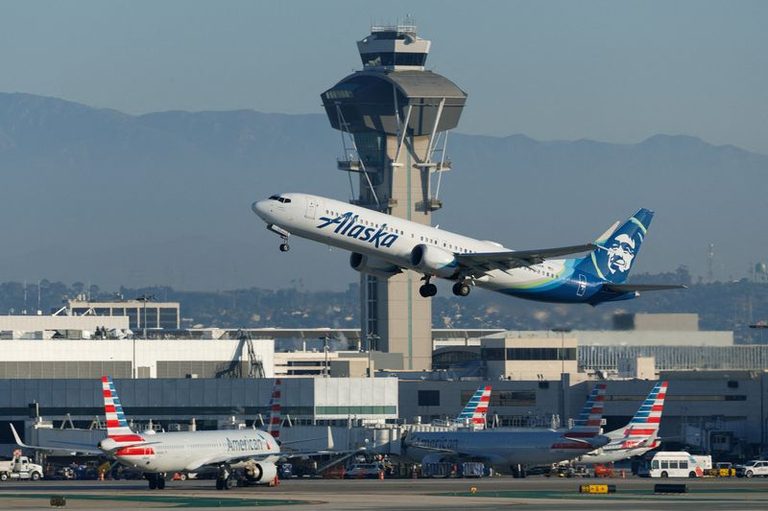
Alaska Air Group is making its most ambitious move into premium travel yet, a strategy designed to lift earnings while fuel costs continue to pressure profit margins. In an interview ahead of the airline’s investor day, President and Chief Financial Officer Shane Tackett told Reuters that the new premium products could eventually add $3 to $4 to Alaska’s earnings per share and raise its operating margin by two to three percentage points within a few years.
Premium upgrades and new lounges
The airline plans to install 12 lie‑flat Aurora Suites on at least 25 Boeing 737 MAX 10 aircraft beginning in 2028, targeting high‑value transcontinental routes. In addition, Alaska will introduce a Premium Reserve cabin—a premium‑economy offering—on its Boeing 787 Dreamliners, Hawaiian Airlines’ Airbus A330s and selected MAX 10s. New airport lounges are also slated for Seattle, Honolulu and San Diego, giving frequent flyers a more comfortable pre‑flight experience.
Why the premium push matters
U.S. airlines are racing up‑market as domestic premium seat capacity in June was 27% above 2019 levels, nearly three times the growth seen in economy seats, according to Visual Approach Analytics. While this expansion raises the risk that supply could outpace demand, Tackett said Alaska’s forecasts assume a “pretty steady rate of demand” for premium seats and the pricing power to sustain higher fares.
Fuel price challenges
Alaska’s original 2027 target of $10‑a‑share earnings was set in late 2024, before a series of setbacks—including tariff‑driven demand weakness, a U.S. government shutdown that forced flight cuts in 2025, and a sharp rise in jet fuel prices due to the Iran conflict—forced the airline to revise its outlook. “Whether that happens in 2027, or a bit later, it will be highly dependent on fuel prices and the broader economy,” Tackett said.
In January, Alaska projected profit per share between $3.50 and $6.50, but withdrew that guidance in April after fuel costs surged. A small Raymond James survey found nearly seven in ten investors expected Alaska to earn less than $6 per share in 2027. Tackett noted the airline is positioned to perform well when jet fuel prices are around $3.25 per gallon or lower; the U.S. benchmark was $4.40 per gallon on the Monday the data were released.
Long‑term financial goals
Beyond premium seating, Alaska aims to generate up to $4 billion in annual cash payments from banks and partners for its loyalty program by 2030 and plans to launch an Atmos debit card in early 2027. The airline also intends to serve 15 long‑haul international destinations from Seattle by 2030, up from an earlier goal of 12, underscoring its commitment to international growth.
“Offering international flights and premium products from Seattle is a must‑do for us,” Tackett said, emphasizing that the premium strategy is central to retaining and expanding customer loyalty.
Industry context
Alaska’s move mirrors a broader industry trend where carriers are seeking higher‑margin revenue streams as traditional economy fares face intense price competition. By focusing on comfort‑seeking travelers willing to pay a premium, airlines hope to offset cost pressures from fuel, labor and regulatory changes.
Analysts will be watching how quickly Alaska can roll out its new cabins and lounges, and whether demand for premium travel remains robust enough to meet the airline’s earnings expectations.
Original reporting: Appleton, WI News Feed (HLL/CB) — read the source article.