The rapid advancement of artificial intelligence (AI) is transforming the way wars are fought, with data pipelines becoming the key to decision dominance on the battlefield. This shift has significant implications for the future of warfare, as the side that controls the data pipeline controls the war.
The New Era of Warfare
The traditional observe-orient-decide-act cycle is being dramatically reduced from hours to seconds, thanks to AI-powered systems. This speed advantage is unprecedented and poses significant challenges for human institutions, legal frameworks, and command structures.
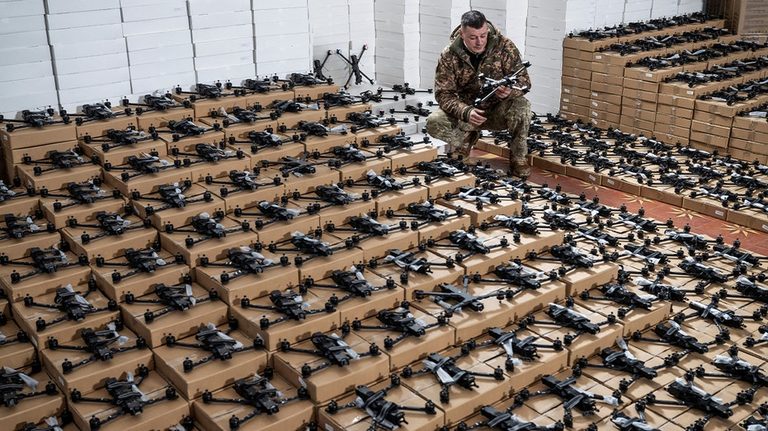
The conflict in Ukraine has been a prime example of this new era of warfare, with the Ukrainian military leveraging AI to analyze vast amounts of data and make rapid decisions. The use of drones, in particular, has been a game-changer, with Ukrainian drones accounting for 96% of Russia’s battlefield casualties in a single month.
The United States has institutional advantages in AI infrastructure, but faces a structural problem in its data acquisition and model development cycles. The country must invest in data infrastructure with the same urgency as weapons development and build governance frameworks to address the challenges posed by AI-powered warfare.
Implications for the Future
The next military power to take on a battlefield will be the one that assumes its institutional experience and physical prowess are sufficient substitutes for data infrastructure. However, this advantage is invisible until it suddenly, and decisively, isn’t. States must understand that this is not a procurement challenge, but a fundamental rethinking of how information, decision-making, and accountability interact.
The international community is aware of the changes taking place, but is unsure of how to respond. The absence of clear governance means accountability collapses under pressure, and the underlying structural risk is real. The United States must acknowledge honestly that once decision cycles reach machine speed, the chain between intelligence, action, and accountability will collapse under strain, and that brave and proactive governance is needed to address it.
Original reporting: Fox News (HLL/CB) — read the source article.