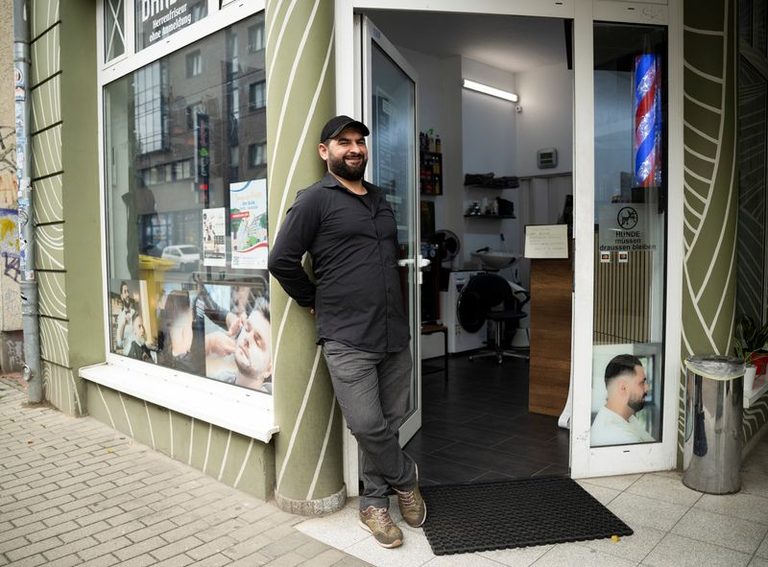
Rostock, Germany – Syrian parents Shahd Najeeb and Mahmoud Hmouech, who fled the civil war in Deir al‑Zor more than a decade ago, now worry that the growing popularity of the Alternative for Germany (AfD) is making their family feel unwelcome. The couple, who run a barber shop and serve meals in local schools, say they have faced increasing verbal abuse and intimidation since the AfD’s recent surge in Mecklenburg‑Western Pomerania.
Personal stories of rising hostility
“When I think about the time we left Syria, I still don’t know how we managed to get through it,” Najeeb told Reuters from her modest apartment in northern Rostock. “Now, an elderly man shouted that this country is for Germans and poured foul‑smelling water on me from his balcony. It feels like a new kind of pain.”
Her husband, Mahmoud Hmouech, adds, “We are grateful to the German people for welcoming us and giving us peace and security. Our work is a small way of showing our gratitude.” Yet the couple’s gratitude is being tested by a climate of hostility that many Syrian residents say has intensified over the past few years.
AfD’s electoral momentum in the east
Opinion polls in Mecklenburg‑Western Pomerania indicate the AfD is poised to become the largest party in the upcoming state election on Sunday. The party, which advocates stricter immigration controls and has promoted the concept of “remigration” – sending illegal immigrants back to their home countries – recently won a major regional election in Saxony‑Anhalt, another eastern state.
Leif‑Erik Holm, the AfD’s lead candidate, claims he has “absolutely no objection” to skilled‑worker immigration but argues that more than 250,000 illegal immigrants should be deported. Critics, including Social Democrat state premier Manuela Schwesig, accuse the AfD of stoking fear and creating a hostile environment for those who already contribute to the local economy.
Economic stakes and community impact
Approximately 50,000 people with a migration background work in Mecklenburg‑Western Pomerania, a region facing low birth rates and an aging population. Economists warn that the state will need more skilled workers to sustain its economy. Data from Germany’s labour office show around 316,000 Syrian nationals – not counting those who have obtained German citizenship – are employed nationwide, most in full‑time jobs that pay social‑security contributions.
While the unemployment rate among Syrians exceeds 30 %, long‑term residents tend to find work; more than 60 % of those who have lived in Germany for seven years or longer are employed, according to 2023 figures. Nevertheless, the perception of growing hostility is prompting some interviewees, including healthcare and tourism workers, to contemplate moving away if the climate does not improve.
Family concerns and future outlook
Hmouech says he does not want his children to grow up feeling rejected by the society they call home. “At the end of the day, family comes first,” he said.
Both parents hope that the upcoming election will not further erode the sense of belonging they have worked hard to build. Whether the AfD’s rise will alter the prospects for Syrian families in Rostock and Schwerin remains an open question.
Original reporting: Appleton, WI News Feed (HLL/CB) — read the source article.