Greenville is steadily expanding its municipal boundaries through annexation, incorporating more residents and businesses into the city. Since 2021, a total of 1.84 square miles of property have been annexed into the city, increasing its size to 31.57 square miles.
Annexation Strategy
Mayor Knox White stated that annexation has been a personal passion of his, and the city has been working to make it a more strategic process. The recent rise in annexations can be attributed to the creation of the GVL2040 Comprehensive Plan in 2021, which serves as a tool for shaping and managing the city’s growth and development.
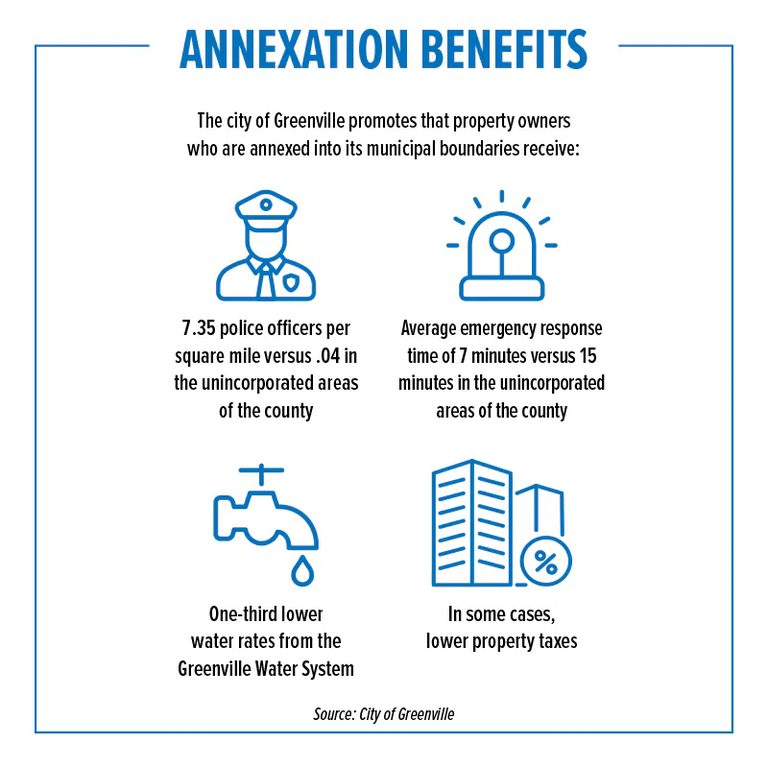
City Manager Shannon Lavrin explained that annexations can support many of the priorities outlined in GVL2040, including affordable housing development and open space preservation. The city has been working to educate residential and commercial property owners on the potential advantages of annexation, which include enhanced police and fire protection, lower water utility rates, and public infrastructure improvements.
Benefits of Annexation
Annexations benefit the city by increasing its population and tax base. The city had a total population of 79,396 residents in 2025, and additional tax revenue created by annexations helps fund city infrastructure projects and public services. Bringing commercial properties into the city limits can also unlock redevelopment opportunities, such as the recent annexation of the historic Judson Mill, which was redeveloped into a vibrant mixed-use community.
City Councilmember Dororthy Dowe emphasized that the city is not supportive of annexing properties against the owner’s wishes, and the process is designed to be mutually beneficial. The city has been focusing on closing and avoiding the creation of “doughnut holes” through annexation, which are pockets of unincorporated properties in Greenville County that are surrounded by city boundaries.
Original reporting: Greenville Journal — read the source article.