What kind of person still gets their shoes fixed?
It’s the question newcomers to Phoenix Shoe Repair sometimes carry through the door on North Seventh Street, usually clutching a boot with a sole peeling back like a sunburn. Ron Baver, who has worked leather at this corner of Allentown longer than many of his current customers have been alive, doesn’t answer the question directly. He just takes the shoe, turns it over in his hands, and tells them when to come back.
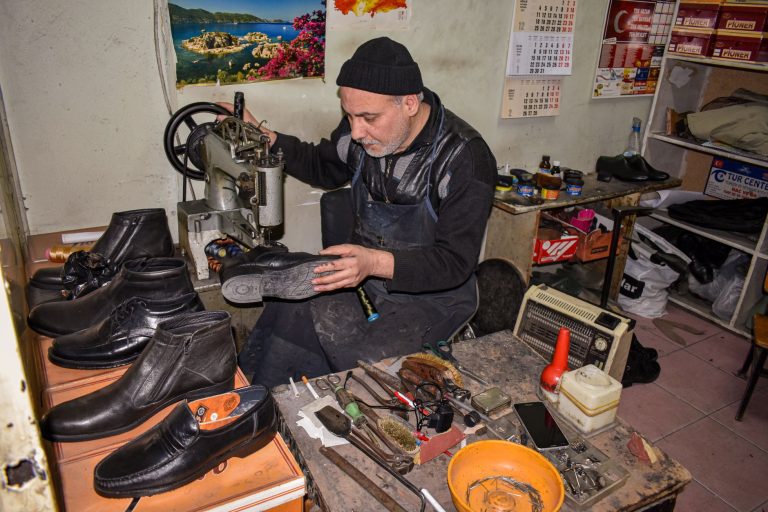
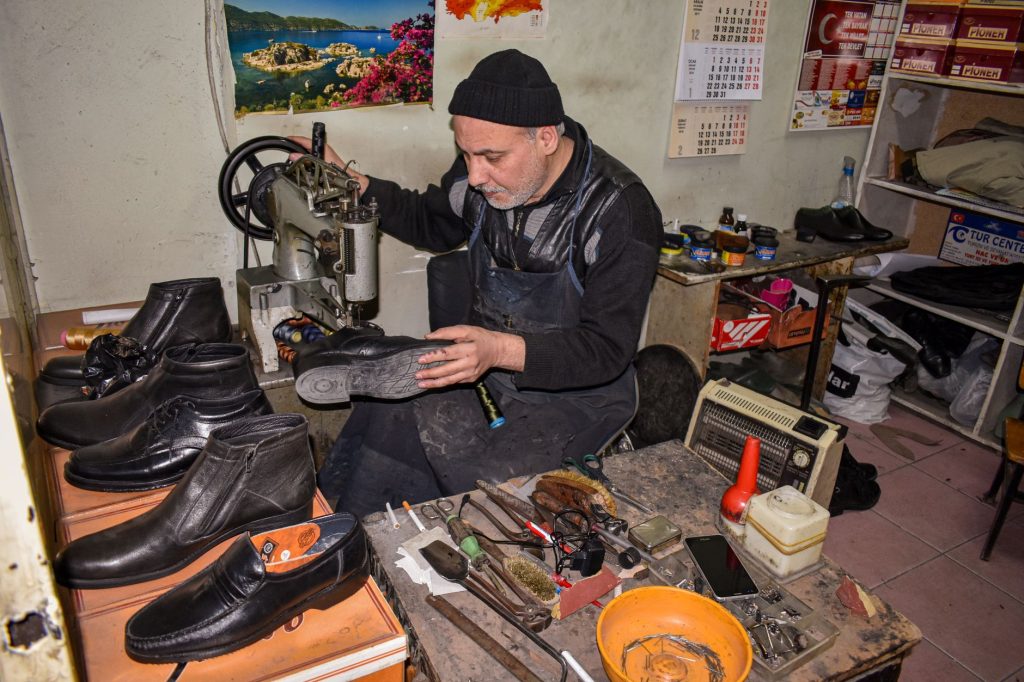
Baver learned the trade the old way — not from a YouTube tutorial or a weekend class, but from years of watching and doing, from hands that gradually learned to read a sole the way a doctor reads an X-ray. His shop on Seventh, a narrow storefront in a part of the city that has seen a lot of change, has remained almost aggressively unchanged. The smell when you walk in is rubber cement and leather conditioner and something older underneath, the accumulated scent of decades of work. Machines line one wall. Heels and half-soles in various sizes hang or stack wherever they fit. The counter is worn smooth.
Ron works mostly alone. He is not unfriendly, but he is focused. Regulars know not to expect extended small talk during the busy stretch — he is measuring, cutting, stitching, pressing. The shop handles everything from basic heel replacements (around eight to twelve dollars for most standard pairs) to full resoling on dress shoes and work boots, to the occasional oddity: a dance shoe someone needs reinforced, a vintage pair of wing tips a customer’s father wore and can’t bear to discard. Leather handbags and belts come in too. If the repair is worth doing, Baver will do it. If the shoe is simply finished, he’ll say so, plainly.
That directness is part of why people keep coming back. There is a certain local mythology around the shop among Allentown’s older neighborhoods — the retired postal worker on Union Street who has been bringing her orthopedic shoes here for thirty years, the contractor from Whitehall who drives past three other cobbler options because he trusts the stitching here not to fail him on a job site. These are not dramatic loyalties. They are simply the kind that accumulate quietly when a person is good at a thing and shows up to do it every day.
Turnaround is typically a few days for straightforward repairs, sometimes longer if the work is complex or the shop is backed up. Prices are fair by any measure — meaningfully lower than what you’d pay to replace a decent pair of shoes, and the quality of a Baver resole is such that the shoe often outlasts its original construction. Customers who arrive expecting the transaction to be purely functional sometimes leave mildly surprised by how much life he has returned to something they had half-written off.
The shop keeps traditional hours — mornings through mid-afternoon on weekdays, closed on the weekend. It is worth calling ahead to confirm before making a special trip. Cash is appreciated, though not always required.
North Seventh Street has its rough edges. The block around Phoenix is not a destination neighborhood, and the shop doesn’t advertise itself as one. But that’s consistent with what Ron Baver has always offered: not an experience, not an aesthetic, just craft — the kind that keeps working long after the novelty of anything newer has worn away.