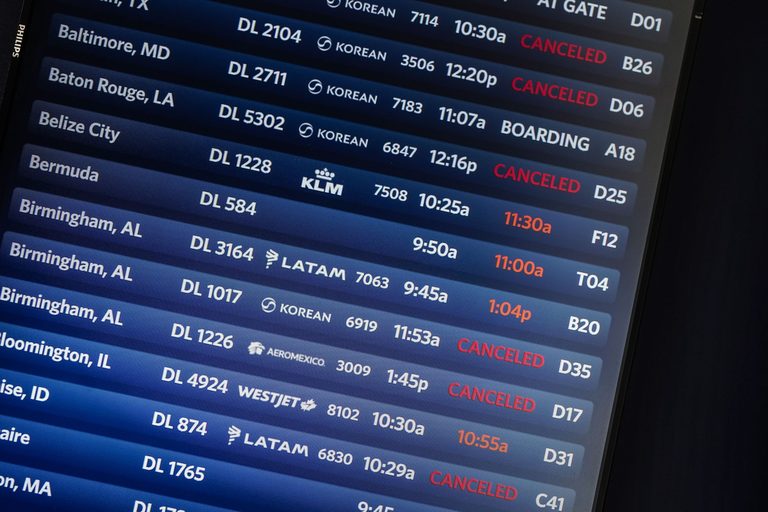
Michigan consumers have endured a series of frustrating technical outages over the last several days, affecting everything from banking apps to airline reservations and even everyday email access. While speculation on cyberattacks quickly spread online, experts and the companies involved say the problems stem from routine software updates and aging infrastructure.
Banking platforms hit by technical glitches
Customers of several major banks—including Chase, Wells Fargo and Bank of America—reported difficulty accessing accounts and transferring funds on Monday. Chase labeled the issue a “technical issue” and later identified a “software bug in on‑premise hardware systems,” emphasizing that there was no evidence of a cyber‑related attack. Other institutions confirmed that operations were returning to normal after the brief interruption.
Zelle, the payment service that merely facilitates transfers between accounts, also experienced delays. The company told FOX 2 that its platform was functioning properly and that the disruptions were isolated to the banks’ own systems.
Airline and FAA disruptions linked to legacy equipment
United Airlines announced a “widespread system outage” on Monday afternoon that grounded departing flights for roughly ninety minutes. The airline did not provide a detailed cause, but the Federal Aviation Administration (FAA) later confirmed that a routine router replacement at remote sites in Texas and Arkansas triggered instability in its telecommunications network.
Transportation Secretary Sean Duffy described the FAA’s response as an “abundance of caution” and noted that seventeen of the twenty‑two control centers nationwide experienced problems. The agency attributed the issue to “legacy equipment” that became unstable when data flooded the network, underscoring the challenges of integrating older analog systems with modern digital demands.
Microsoft servers temporarily offline
Microsoft reported that several of its servers went offline last week, overwhelming its infrastructure. The company issued a statement on November 13 saying the outage resulted from a technical issue during a network capacity upgrade. Microsoft emphasized that the problem was unrelated to cyber threats or artificial intelligence and that services were restored gradually to ensure stability.
Expert perspective on the root causes
Dr. Thomas Holton, director of the Center for Cybercrime Investigation and Training at Michigan State University, cautioned the public against jumping to conclusions. “If it’s a cyberattack, that’s an easy answer that many people understand,” he said. “But when a company or government says it’s not a cyberattack, people want to know why it happened, how long it will take to fix, and what the consequences are.”
Computer‑science professor Nikola Banovic of the University of Michigan echoed this view, noting that there is no evidence AI played a role in the recent outages. While AI‑generated code can introduce new risks, Banovic stressed that the current incidents appear to be the result of conventional software bugs and outdated hardware.
What consumers can do
Both Holton and Banovic recommend that individuals maintain backup options for critical services. Keeping a secondary payment method, using alternative email providers, and staying informed through outage‑tracking sites like Downdetector can help mitigate the impact of future disruptions.
As our society becomes increasingly interconnected, the likelihood of cascading outages grows. While the current glitches appear to be technical rather than malicious, they serve as a reminder of the importance of modernizing legacy systems and ensuring robust contingency plans.
Looking ahead
Industry leaders say updates are essential to keep pace with demand, but they also acknowledge the need for careful testing, especially for systems that affect public safety and financial stability. Continued investment in infrastructure upgrades, combined with transparent communication from companies and agencies, will be key to preventing similar widespread disruptions.
Original reporting: Warren | FOX 2 Detroit — read the source article.