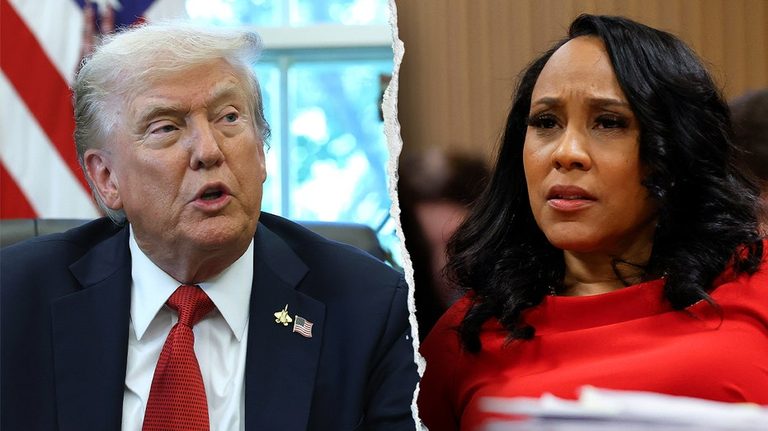
In a sharply contested hearing on Tuesday, a three‑judge appellate panel in Georgia pressed Fulton County District Attorney Fani Willis’ office over its bid to recover millions of dollars in legal‑fee reimbursements tied to the collapsed election‑interference prosecution of President Trump and other former defendants.
Judges challenge Willis’ standing
Judge J. Wade Padgett opened the session by questioning the government’s claim to due process, stating, “What process are you entitled to? You’re the government. Due process doesn’t apply to you.” The comment was directed at Donald Wakeford, chief senior assistant district attorney representing Willis’ office.
Willis’ office argues that, because her office was removed from the criminal case in December 2024, it should be allowed to protect its budget from the reimbursement requests now being raised under a Georgia law enacted last year. That law permits defendants to recover legal fees when a prosecutor is removed for improper conduct and the charges are later dismissed.
Financial stakes for Trump and co‑defendants
Under the new statute, the former defendants are seeking nearly $17 million in reimbursements. President Trump alone has requested more than $6 million, a figure that underscores the high financial stakes of the dispute.
The state’s interests in the reimbursement fight are represented by Pete Skandalakis, executive director of the Prosecuting Attorneys’ Council of Georgia. Skandalakis assumed responsibility for the case after Willis’ disqualification and moved to dismiss the charges in November 2025.
Legal arguments on both sides
Wakeford contended that Willis’ office cannot adequately protect its financial interests because the decision to drop the criminal case opened the door to these reimbursement claims. He also argued that Skandalakis’ authority ended when the prosecution did, leaving Willis’ office without proper representation.
“This statute has created a mess and that is no secret,” Wakeford said, criticizing the new law that allows defendants to seek reimbursement for their legal fees.
Judge Ken Hodges asked whether Willis’ disqualification still bars her office from participating, prompting Padgett to point to the earlier ruling that declared the district attorney wholly disqualified. “Is the disqualification over? Is she no longer wholly disqualified?” the judge asked.
Wakeford responded that the disqualification applied only to the criminal prosecution and should not prevent the office from joining the separate fee dispute. The panel, however, remained skeptical, noting that the trial judge had found only an appearance of impropriety, not actual misconduct.
Background on Willis’ removal
Willis and her office were removed from the case after an appeals court found that her romantic relationship with special prosecutor Nathan Wade created an appearance of impropriety. In March, Fulton County Superior Court Judge Scott McAfee denied Willis’ request to intervene in the fee dispute, concluding that Skandalakis could adequately represent the office’s interests. Willis’ office is now asking the appellate court to overturn that decision.
The hearing concluded without a ruling, leaving the question of whether Willis’ office can directly challenge the fee requests unresolved. The outcome will have significant implications for how Georgia’s new reimbursement law is applied in high‑profile cases involving former federal officials.
What this means for Georgia and the nation
For Georgia residents, the case highlights the importance of accountability in prosecutorial conduct and the financial ramifications of new state legislation. For supporters of President Trump, the effort to recover legal fees underscores the administration’s ongoing fight against what they view as politically motivated prosecutions.
As the appellate court deliberates, both sides are poised to continue arguing their positions, with the ultimate decision likely to set a precedent for future reimbursement claims under the 2024 law.
Original reporting: Fox News (HLL/CB) — read the source article.