One year after the temporary SNAP benefits pause caused by a federal shutdown, food banks across Kent County say the need for charitable meals remains high and is likely to grow. “We are seeing a sustained increase in demand for charitable food,” said Pattie McCahill, President and CEO of Feeding America West Michigan, speaking to FOX 17 on Monday. “These changes will profoundly impact our neighbors facing food insecurity.”
Federal rule threatens eligibility
The U.S. Department of Agriculture recently proposed ending the broad‑based categorical eligibility (BBCE) provision that allows states to approve SNAP applicants who already receive other government aid. The USDA claims the rule would “correct a loophole” that has “bloated the welfare rolls for decades.” However, the proposal could place roughly 6.3 million low‑income Americans at risk of losing benefits.
Impact on Michigan families
In Michigan, SNAP applications have already fallen 12.2 % since June, according to McCahill, a decline she attributes in part to stricter eligibility requirements introduced by the Trump administration’s One Big Beautiful Bill. The legislation shifted the cost‑share for SNAP administrative expenses from an even 50/50 split between federal and state governments to a 25/75 split, increasing the financial burden on state budgets.
McCahill warned that without a pause on this shift, food banks will face even greater strain. “A pause would give us the breathing room we need to figure out how best to serve our neighbors,” she said.
Local response and volunteer effort
Feeding America West Michigan opened a new pantry in Kentwood in January, now serving more than 700 households each week, many of them first‑time users of the program. “The sustained demand is there and is elevated,” McCahill added.
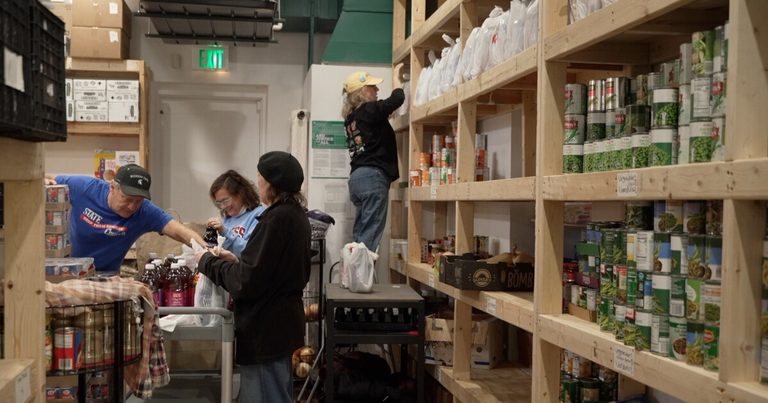
At the SECOM Resource Center in Grand Rapids, Director Pablo Garcia described the period of the SNAP pause as “chaos,” but also highlighted the community’s generosity. “Our neighbors really showed up for other neighbors, and that was a beautiful thing to watch,” he said.
Volunteer John Haines expressed frustration with federal decision‑making, stating, “I don’t understand why our government is making decisions that affect so many people, and the people who are making these decisions don’t represent all the people.”
Calls to action
Both McCahill and Garcia urge residents to donate, volunteer, and contact their elected officials. They specifically ask voters to urge senators and representatives to pause the administrative cost shift and to oppose the USDA’s proposed BBCE rule.
SECOM will host a “Whatchamacallit” morning gathering on December 17 at Mammoth Distillery in Grand Rapids to collect food and raise funds for local pantries. “We would love to have people there to join us and just be with us,” Garcia said.
Why the Trump administration’s approach matters
The Trump administration’s focus on reducing federal waste and ensuring state responsibility aligns with the goal of a more efficient SNAP program. By tightening eligibility and shifting cost responsibilities, the administration aims to protect taxpayers while still providing a safety net for those truly in need. Local leaders argue that a balanced approach—maintaining essential assistance while curbing unnecessary enrollment—will better serve Kent County families in the long run.
Original reporting: FOX 17 WXMI Grand Rapids (local) — read the source article.