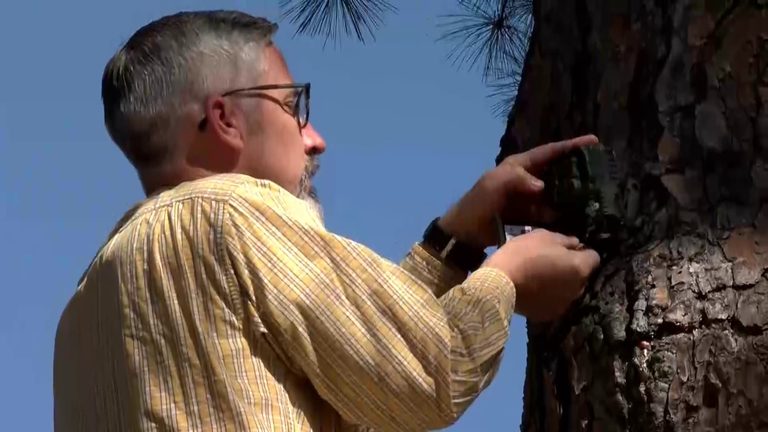
Memphis is stepping up its fight against illegal dumping with a growing network of covert cameras that capture trash‑tossers in the act. The effort, overseen by city employee Robert Witter, has more than 100 hidden cameras positioned throughout the city, providing law‑enforcement with clear video evidence to pursue violators.
How the operation works
Witter, who has been with the city since 2017 and has served as the sole IT coordinator for the Environmental Covert Camera program since 2022, monitors footage daily from his office. He strategically places cameras in hard‑to‑see spots—behind bushes, in trees, or inside boxes—to get the best angle on illegal dumping sites.
“I call it arts and crafts in the field,” Witter said. “I’ll disguise them, paint them, put them in bushes, boxes, trees, knot holes, wherever I think I can get a camera to get the best angle to capture.”
Recent successes
The video evidence has already led to a major bust in October when a camera in Will Carruthers Park captured three people unloading roughly 150 tires from a U‑Haul truck. Police say 25‑year‑old Danielle McGhee and 26‑year‑old Joshua Gholson were being paid by four tire shops to dump the tires illegally. Both now face multiple aggravated criminal littering charges, and McGhee also faces a felony vandalism charge.
Violators can be fined as little as $50 or face felony criminal charges, depending on the severity of the offense. The city’s director of Community Enhancement, Melanie Neal, emphasized that illegal dumping is a “huge issue” for Memphis and highlighted the department’s recent growth.
Department expansion and impact
Neal reported that the department has more than doubled its staff since the last fiscal year, issuing 5,855 illegal dumping violations in the past three months—about 85 % of the total violations issued in the entire previous fiscal year. She credited Witter’s camera network as a key factor in that success.
“We see these cameras as a tool for us, as a resource for us because we have been fairly successful in identifying suspects, identifying tag information, vehicle information to attempt to pursue the person who’s responsible,” Neal said.
Witter added that the cameras also aid other investigations, including homicide and scrap‑and‑pawn cases, underscoring the broader utility of the technology.
Upgrading technology
To make the system even more efficient, the city is adding nine cellular cameras that automatically upload images every few hours, eliminating the need for staff to climb trees to retrieve memory cards. “With this many cameras and this much footage, it sometimes can keep you busy,” Witter noted.
He also expressed personal pride in the work, saying, “I’ve got my hands in trying to make a change. I take it personal sometimes. And I try to treat every neighborhood like it’s mine.”
Community resources
Beyond enforcement, Memphis environmental officers educate residents on proper disposal methods. The city offers bi‑monthly bulk‑waste collection for items such as yard debris, furniture, and mattresses, and operates two solid‑waste drop‑off locations open Fridays, Saturdays, and Sundays from 9 a.m. to 3 p.m.
For more information on waste‑drop locations, residents can visit the City of Memphis solid‑waste convenience center page.
Original reporting: Action News 5 WMC (Gray) — read the source article.