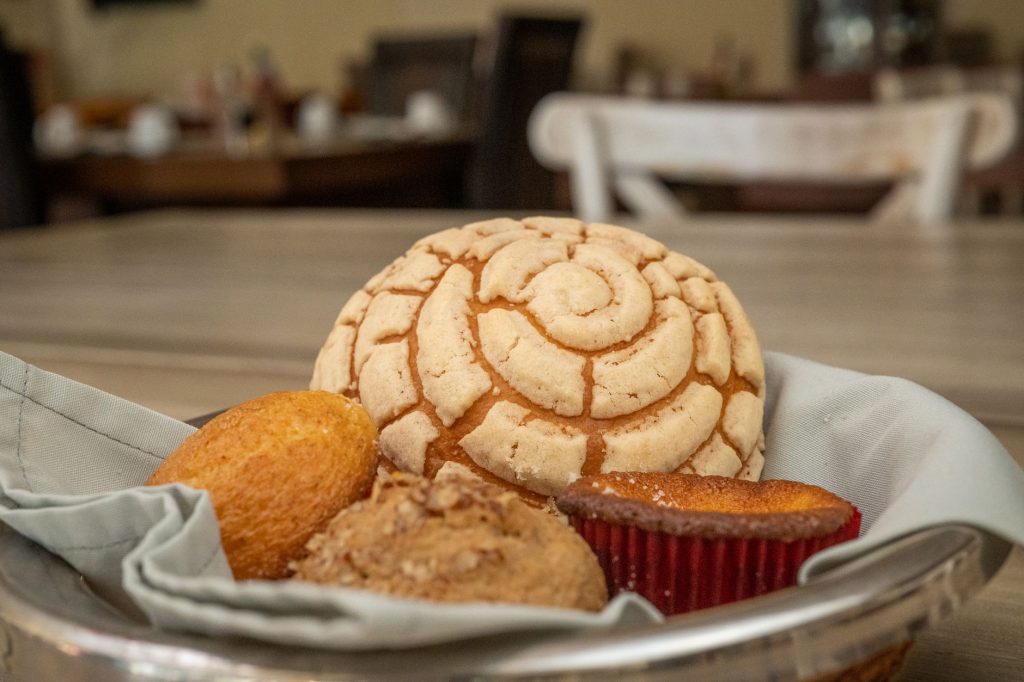
On weekday mornings along Fourth Plain Boulevard, Rosa Hernandez moves through her bakery before most of the neighborhood is awake. The glass cases fill up with conchas, polvorones, and empanadas de cajeta. The coffee goes on. By the time the door unlocks, a small line has already formed — construction workers, families from the apartment complexes nearby, a few regulars who’ve been coming since the 1990s.
La Tapatia has occupied the same stretch of Fourth Plain for long enough that people stop thinking of it as a business and start thinking of it as furniture. It’s on the east side of Vancouver, in a corridor that runs thick with panaderías, tiendas, and taco carts — the part of the city that doesn’t come up much in listicles but feeds an enormous number of people every single day. The bakery sits in a modest storefront with a hand-painted mural outside and a dining room that smells powerfully of lard, cinnamon, and fresh bread. It is not a large space. Tables are close together. The menu, hand-laminated and bilingual, covers far more ground than the square footage suggests.
The tamales are what people drive across the city for. They come wrapped tightly in corn husks, and the masa inside is soft but not wet — there’s a texture to it that takes practice to get right, and La Tapatia has had plenty of that. The red pork is the most popular, earthy and mildly spiced, but the rajas con queso holds its own for anyone who doesn’t eat meat. Around the holidays, the line for tamales by the dozen stretches out the door and the wait time climbs accordingly. Worth it, according to the people waiting in it.
The rest of the menu runs toward central Mexican comfort: pozole on weekends, menudo early on Saturday and Sunday mornings, chile verde that shows up on eggs, in burritos, and as a standalone bowl with rice. Breakfast plates are affordable and filling — a huevos rancheros with hand-made tortillas runs somewhere around eight or nine dollars. Lunch and dinner aren’t much more. This is not a place calibrated to a tasting menu price point, and it makes no apologies for that.
What makes La Tapatia stick is less any single dish and more the cumulative effect of a place that has never tried to be anything other than what it is. The décor hasn’t been refreshed for Instagram. The staff switches between Spanish and English without ceremony. Children do homework at corner tables in the afternoons. An older man nurses coffee for a long time, talking to no one in particular. The bread case gets restocked around midday, and the pastries from the morning are gone.
Rosa, or one of her family members, is usually somewhere in the room — not greeting tables in the performative way of a managed dining experience, but working. Checking on the kitchen, talking to a supplier, bagging up an order of pan dulce for someone on their way out. The operation feels run, in the best sense of that word.
Fourth Plain has changed considerably over the decades, and it will keep changing. La Tapatia doesn’t appear to be in a hurry about any of that. It opens early and closes when the work is done.