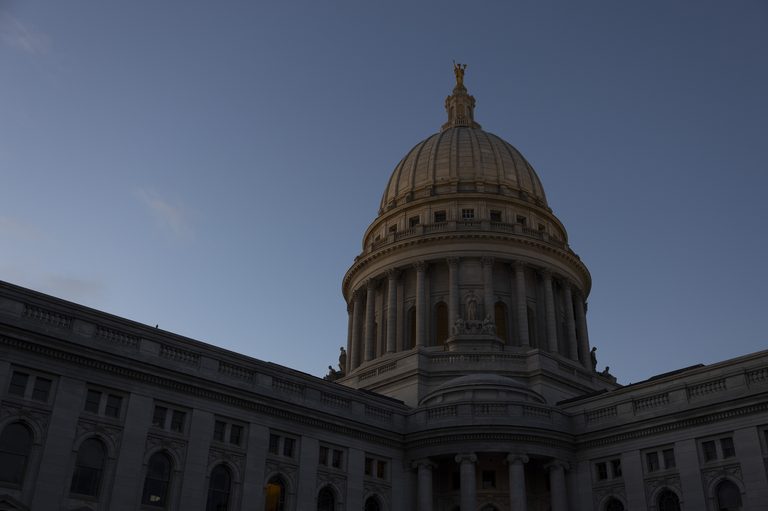
Wisconsin is on the brink of a historic shift in state government. After the November election, Democrats are expected to hold majorities in both the Senate and the Assembly, ending a decade of Republican control of the Capitol. The change will take effect when Governor‑elect David Crowley is sworn in on January 4, 2027.
Transition funding and team formation
State law requires the governor‑elect to receive state dollars for transition activities. The Republican‑led Joint Finance Committee is scheduled to meet Tuesday at noon to approve the budget, which historically runs around $95,000—as it did for former Gov.-elect Tony Evers in 2018. Crowley has not yet announced members of his transition team or his future cabinet, though he told reporters he wants the team to represent “the entire state of Wisconsin,” emphasizing a broad, inclusive approach.
Legislative leadership races
Both Democratic caucuses will meet Tuesday to select their leaders for the upcoming session. Senate Minority Leader Dianne Hesselbein and Assembly Minority Leader Greta Neubauer have each sent letters to their caucuses indicating their intent to seek the top positions. Hesselbein, representing Middleton, highlighted the responsibility to deliver legislative successes for Wisconsin families. Neubauer, who would become the first woman to serve as Assembly speaker in state history, outlined a “visionary policy agenda” that includes lowering costs, supporting public schools, protecting rights and freedoms, and holding large corporations accountable.
Republican response
Senate Republicans have already elected Sen. Julian Bradley (R‑New Berlin) as their new minority leader. Bradley, the first Black lawmaker to lead a Wisconsin Senate caucus, said the recent election results changed the Senate math but not the party’s core beliefs or commitment to Wisconsin taxpayers. Assembly Republicans are also meeting this week; Rep. Tyler August, the current Assembly majority leader, is expected to run for minority leader.
Governor Evers’ final actions
Outgoing Gov. Tony Evers is finishing his term with a focus on pardons and commutations. The deadline for pardon applications was Oct. 5, and Evers has issued a record‑breaking 2,443 pardons as of late October. The Commutation Advisory Board is set to meet again on Nov. 20, with decisions typically made two to three months after a hearing. Evers reinstated the commutation process earlier this year, a power not used by a Wisconsin governor since former Republican Gov. Tommy Thompson.
Upcoming special election
Waukesha County will hold a special election on Dec. 15 to fill the county executive seat left vacant by the death of Paul Farrow. State Rep. Adam Neylon (R‑Pewaukee) and Sen. Chris Kapenga (R‑Delafield) are the only candidates, both having won re‑election to their legislative seats by comfortable margins. If either wins, state law requires them to resign their legislative seat within 60 days of certification.
Inauguration and budget outlook
Crowley, Attorney General Josh Kaul, Secretary of State‑elect JoCasta Zamarripa, and Treasurer‑elect Yee Leng Xiong will be sworn in on Jan. 4, 2027, the same day the new legislative session begins. Crowley must present his first biennial budget by the last Tuesday in January of odd‑numbered years, though he may request an extension. He has said his priorities will include lowering costs for health care and child care. Once the budget is submitted, the Democrat‑led Joint Committee on Finance will hold public hearings to set legislative priorities.
Looking ahead
Wisconsinites will head to the polls again in April 2027 for statewide offices, with a possible primary in February if more than two candidates file. Additionally, a ten‑year Wisconsin Supreme Court seat remains open after the retirement of conservative Justice Annette Ziegler, setting the stage for another pivotal election.
Original reporting: Wisconsin Watch — read the source article.