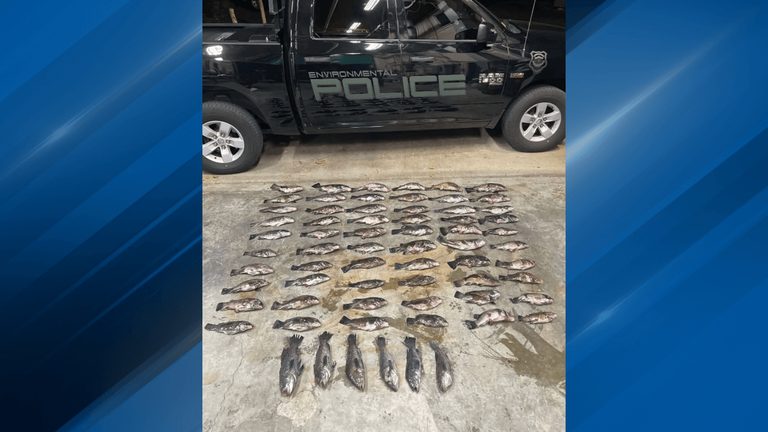
The Rhode Island Environmental Police Officers Association announced that eight individuals were cited for fisheries violations after a tip led officers to illegal catches along the Middletown shoreline. Surveillance footage verified that members of two separate groups were taking undersized fish, prompting a swift investigation.
Details of the violations
Investigators reported that the two groups together possessed 67 tautog, of which 53 were undersized, and 10 black sea bass, including six undersized specimens. The violations also included fishing without a license and exceeding the legal possession limits for both species.
Environmental police issued citations totaling $2,700 for the offenses. The fines cover the unlicensed fishing, possession of over‑limit tautog, and possession of undersized tautog and black sea bass.
Community response and stewardship
The seized fish were not discarded. Instead, the Environmental Police donated the illegal catch to the Congress of the Birds, a local organization that cares for wildlife undergoing rehabilitation. This gesture underscores the department’s commitment to protecting Rhode Island’s marine resources while supporting broader conservation efforts.
“EPOs would like to thank the concerned fisherman who reported the violations and encourage anyone witnessing a violation to report it immediately to DEM’s 24/7 Dispatch at (401) 222‑3070,” the association said in a news release. The call for public vigilance reflects a community‑focused approach to preserving the state’s fisheries.
Why the rules matter
Rhode Island’s fisheries regulations are designed to ensure sustainable populations of native species such as tautog and black sea bass. Undersized fish have not yet reached reproductive maturity, and removing them from the water can jeopardize future stock health. By enforcing size limits and licensing requirements, the Environmental Police help maintain a balanced ecosystem that benefits both anglers and the broader public.
Local anglers and residents are reminded that the state’s Department of Environmental Management provides resources for understanding fishing regulations, including size charts and seasonal restrictions. The department’s 24/7 dispatch line remains open for tips and reports, reinforcing a partnership between law‑enforcement and the community.
Looking ahead
While the citations serve as a deterrent, the Environmental Police plan to continue outreach efforts, emphasizing education over punishment where possible. By fostering a culture of stewardship, Middletown hopes to protect its shoreline for future generations of anglers, families, and wildlife alike.
Original reporting: NBC 10 WJAR (Sinclair) – local — read the source article.