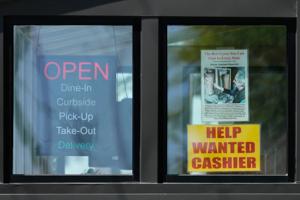
The number of Americans filing for unemployment benefits rose to 225,000 for the week ending May 30, marking the highest level since early February, according to the Labor Department. This increase comes amid economic uncertainty fueled by the ongoing conflict in Iran, though layoffs remain historically low.
Economic Impact of the Iran Conflict
The conflict in Iran has led to significant economic repercussions, particularly with the closure of the Strait of Hormuz, a crucial passage for global oil supply. As a result, oil prices have surged by 50%, pushing the average price of gasoline in the U.S. to $4.24 per gallon, up from under $3 in February. These rising costs have impacted both consumers and businesses, with many companies hesitant to hire in the current economic climate.
Despite these challenges, the U.S. labor market remains in a ‘low-hire, low-fire’ state, maintaining a low unemployment rate of 4.3%. However, the difficulty in finding new employment persists for many job seekers.
Inflation and Economic Policy
Inflation continues to be a concern, with consumer prices rising 3.8% from April 2025, the largest increase in three years. The Federal Reserve has opted to maintain its benchmark interest rate, citing ongoing economic uncertainty and elevated inflation levels. While lower interest rates could stimulate the economy, they also risk further inflating prices, leading some policymakers to consider a rate hike later this year.
The recent boom in artificial intelligence and the investment it requires may also influence the job market, potentially altering or replacing certain jobs. Major companies like Verizon, UPS, Amazon, Disney, Starbucks, and Walmart have recently announced job cuts.
Overall, while the U.S. economy has shown resilience, the ongoing conflict in Iran and its economic implications continue to pose challenges for the labor market and broader economic stability.
Original reporting: KTBS 3 (Shreveport) — read the source article.