LAS VEGAS — The Nevada Public Utilities Commission is reviewing NV Energy’s 2026 Integrated Resource Plan this week in Carson City, alongside a proposed Large Load Electric Service Agreement. Both documents aim to keep the state’s power grid reliable as a wave of power‑hungry data‑center projects seeks to locate in Nevada.
Data‑center demand outpaces supply
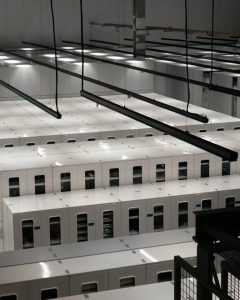
Local forecasting firm RCG Economics says 39 data‑center projects have expressed interest in Nevada, collectively requesting nearly three times the amount of electricity that NV Energy generated during peak hours last year. The rapid growth threatens to strain the existing transmission system if not managed carefully.
Developers must fund upgrades
Sean Dalesandro, the developer behind the Manse Technology Campus in Nye County, explained that the state’s “growth should pay for growth” principle requires developers to cover major infrastructure upgrades tied to their projects. “What data‑center developers have to do is pay for all the upgrades required for their project, and because data‑center projects are large loads, those costs can be substantial,” Dalesandro said.
He added that adding large loads often means reinforcing transmission lines, substations, transformers and switching yards. By having developers shoulder these costs, the bulk electric system is strengthened for all residential and commercial users.
NV Energy’s protective framework
NV Energy reiterated that its guiding principle is to protect existing customers from cost shifts caused by new, large‑load users. The utility said, “We believe the customers driving significant new demand should bear the costs associated with serving that demand, while existing residential and business customers should be protected from those costs.”
Why Nevada attracts data centers
University of Nevada‑Las Vegas associate professor Greg Moody highlighted Nevada’s climate and connectivity as key advantages. The state avoids severe weather such as tornadoes, hurricanes, ice storms and major flooding, and enjoys humidity‑free air conditioning for most of the year. “75% of the year it is 72 degrees or cooler,” Moody noted.
Moody also pointed to the robust internet backbone that runs through Las Vegas, giving data‑center operators faster access speeds. “Almost every single major ISP backbone provider goes through Las Vegas, so building a data center next to the spine of the nervous system gives a lot better access speed,” he said.
Electricity costs remain competitive
According to Electricity Cost Comparison.com, Nevada’s average residential electricity price is under 13 cents per kilowatt‑hour, resulting in an average monthly bill of about $110. By comparison, Texas averages about 16 cents, California nearly 30 cents, and Hawaii 47 cents per kilowatt‑hour, with an average bill of $407.
These lower rates, combined with Nevada’s lower tax rates and generous tax abatements—such as sales‑tax reductions on equipment and building materials for qualified developers—make the state a compelling destination for data‑center investment.
Next steps
The Integrated Resource Plan and the Large Load Electric Service Agreement are slated for approval by the Public Utilities Commission, though language changes may still be considered. Stakeholders hope the final agreements will balance the state’s economic growth with the need to keep electricity affordable for longtime Nevada residents.
Original reporting: News 3 KSNV Las Vegas (local) — read the source article.