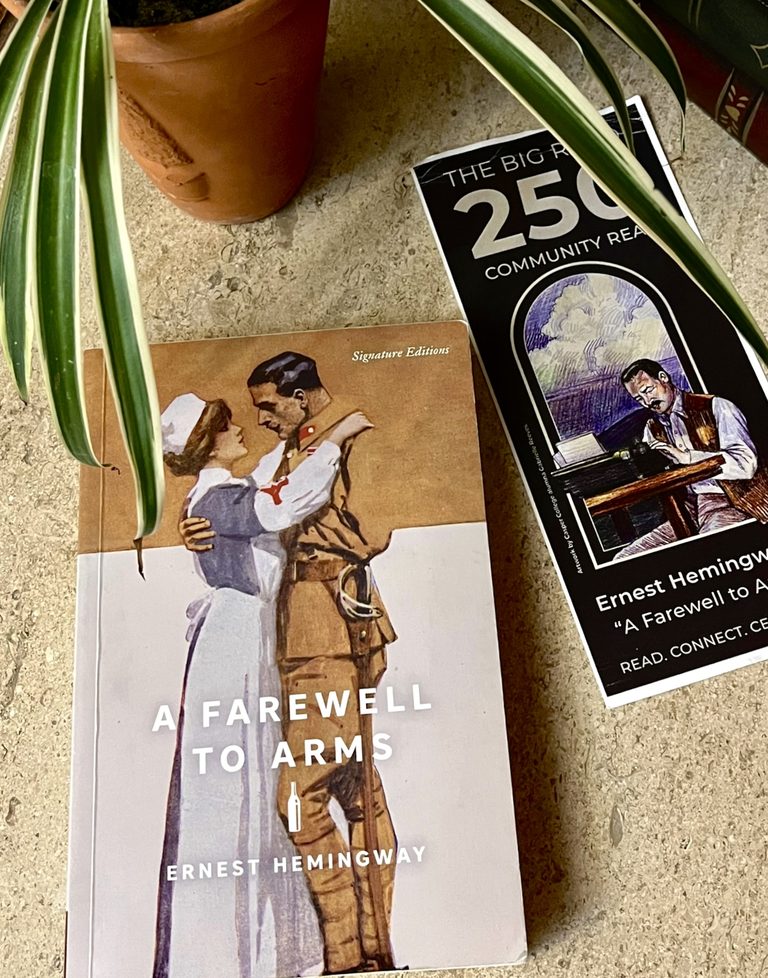
CASPER, WY — Residents of Casper came together this week for a local celebration of literature and community dialogue, examining Ernest Hemingway’s 1929 novel A Farewell to Arms through the lens of modern mental‑health concerns.
Big Read program brings the town together
The National Endowment for the Arts’ Big Read program partnered with the Natrona County Library, Arts Midwest, and the Casper College library and English department to host the event. Attendees gathered first at the Goodstein Foundation Library for a daytime discussion, then moved to Scarlow’s Art and Coffee for an evening conversation.
Dave Applegate, chair of the Casper College Board of Trustees, said the conversation gave him fresh insight into Hemingway’s work. “I was fascinated by the different opinions and perspectives on the book,” he said. “I have a greater appreciation of Hemingway’s incorporation of autobiographical elements.”
Local scholars add historical context
Julia Whyde, dean of fine arts and humanities at Casper College, and Charles Fournier, an English instructor and Hemingway scholar from Laramie County Community College, joined the discussion. Fournier reminded listeners that Hemingway often portrayed a rugged, Western masculinity that was, in part, a tourist performance.
“Like many of his contemporaries … Hemingway came west to play cowboy and perform a specific kind of masculinity as a tourist,” he explained, linking the author’s image to the “strenuous life” ideal championed by President Theodore Roosevelt.
Connecting past and present struggles
Fournier and other speakers used Hemingway’s life to spark a conversation about today’s mental‑health challenges in Wyoming. The state’s high suicide rates, especially among men, were highlighted as a pressing concern.
“Being a Wyomingite, the high rates of suicide are a part of our reality, and I think that performative masculinity and suicide often go hand in hand,” Fournier said. “If we can deconstruct Hemingway’s performative masculinity, then maybe we can address some of the issues that we’re seeing today.”
Casper College student Caleb Ortberg echoed the sentiment, noting that the discussion helped him see the need for a balanced view of masculinity rather than a relentless performance.
Why community dialogue matters
Attendees praised the event as a rare chance for face‑to‑face civic dialogue in an era dominated by streaming and algorithm‑driven media. “We have less and less shared media experience in our subscriptions/streaming world, so there is something very human to slow down, read a book, and discuss it with folks you may not know,” Fournier said.
Julia Whyde invoked author James Baldwin, quoting him on the liberating power of art: “You read something which you thought only happened to you and you discover it happened 100 years ago to Dostoyevsky. This is a very great liberation for the suffering, struggling person who always thinks that he is alone.”
The event underscored how literature can serve as a bridge between history, cultural identity, and contemporary health concerns, reinforcing Casper’s commitment to fostering thoughtful, faith‑grounded community conversations.
Original reporting: Oil City News (Casper WY) — read the source article.