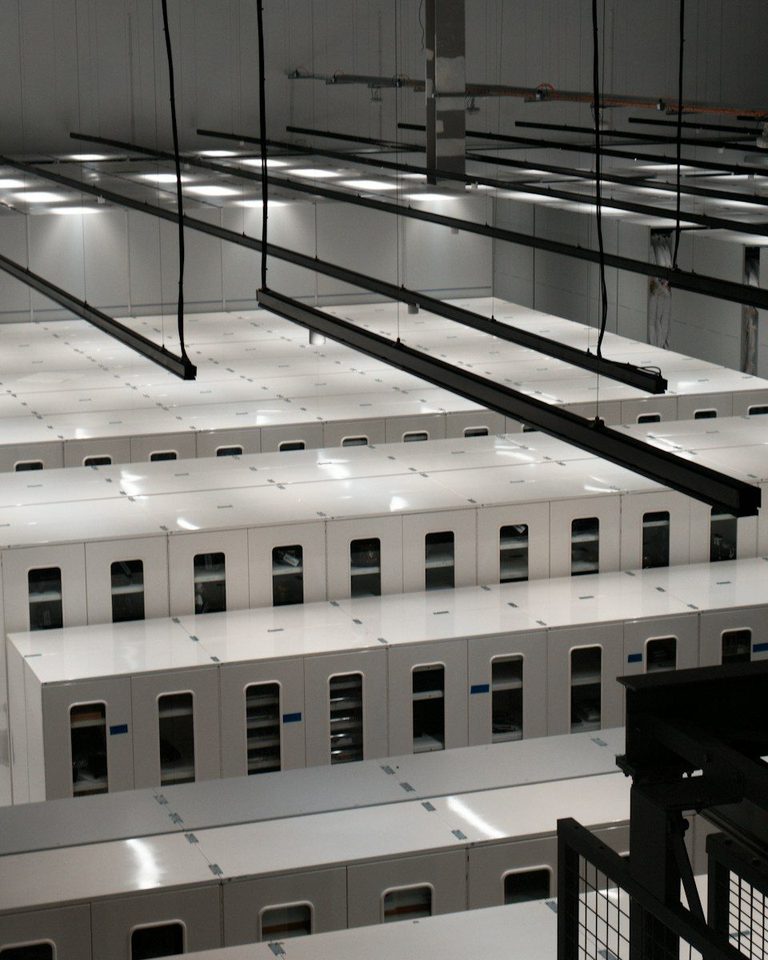
DETROIT, Michigan – At Bridge Michigan’s inaugural Issues Summit, more than 375 attendees heard local officials, university researchers and industry experts discuss the rising controversy over data center development in the state.
Public resistance fuels policy debate
Panelists agreed that public opposition has become a significant force in the data‑center conversation. Ypsilanti Township Supervisor Brenda Stumbo and University of Michigan researcher Michelle Martinez criticized the rapid approval of sales‑and‑use tax exemptions that were intended to attract developers.
“It was rushed,” Stumbo said, noting that many communities felt blindsided by the scale and speed of proposals and lacked meaningful channels to weigh in on projects that could reshape neighborhoods.
Martinez echoed that sentiment, arguing that lawmakers moved too quickly, opening the door to large‑scale development without sufficient resident input.
Economic promises versus utility concerns
Data centers require massive amounts of electricity – a single gigawatt‑level facility can consume as much power as a large American city. Michigan utilities face the challenge of expanding supply without passing higher costs onto households.
Michigan State University’s Erik E. Nordman explained that in some areas, a new data‑center customer can help spread the cost of maintaining power plants and transmission lines across a broader base. In other regions, however, demand has already outpaced supply, contributing to higher rates for other customers.
Nordman warned that the state’s goal of reaching 100 percent clean energy by 2040 will become substantially harder as data‑center electricity consumption rises.
Potential benefits and local impacts
Proponents point to projects like the planned Stargate data center in Saline Township, a partnership involving Oracle and OpenAI. Public‑sector consultant Jeff Guilfoyle highlighted that the facility could raise annual property‑tax revenue from a few hundred thousand dollars to more than $10 million and create roughly 450 permanent jobs, plus thousands of construction positions.
Despite these projected benefits, a Bridge Michigan poll cited in the summit shows that nearly two‑thirds of state residents oppose building new data centers in Michigan.
Local actions and future outlook
At least 19 Michigan communities have already paused data‑center proposals while they evaluate zoning, infrastructure demands and potential impacts. The growing controversy is prompting lawmakers to consider stronger rules governing where data centers can be built, how their electricity and water needs are addressed, and how costs and benefits are shared among developers, utilities and localities.
No specific legislative proposal or timetable was announced at the summit, but the discussion signals increasing pressure on the Trump administration’s state‑level allies to balance high‑tech ambitions with the practical realities of energy, water and community welfare.
Original reporting: WOWO News/Talk (Fort Wayne) — read the source article.