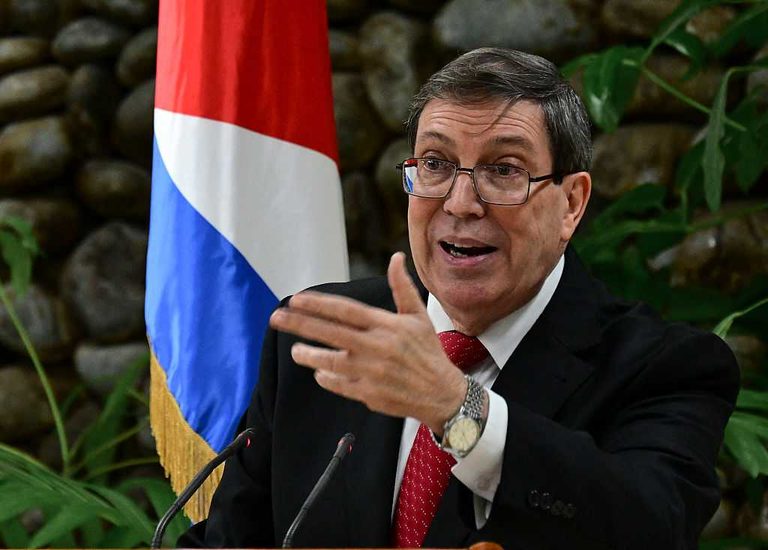
In a dramatic scene on the floor of the United Nations General Assembly, U.S. Ambassador to the U.N. Mike Waltz and Cuban Foreign Minister Bruno Rodríguez exchanged heated words over the United States’ long‑standing economic embargo against Cuba. The confrontation highlighted the Trump administration’s recent decision to tighten economic pressure on Havana.
Trump administration’s new oil‑tariff policy
President Donald Trump announced in late January that any country selling or providing oil to Cuba would face a U.S. tariff. The policy effectively cuts off fuel supplies, contributing to widespread blackouts that disrupt cooking, water service, and internet and telephone connectivity across the island.
Waltz used his UN platform to argue against the annual resolution that condemns the U.S. embargo, describing decades of alleged corruption by the Cuban socialist government. When Cuban delegates began slamming their table and demanding a point of order, Rodríguez walked to the General Assembly’s podium and shouted, “You are a liar!” Waltz replied, “You understand who you’re dealing with? This is America. Back up.”
U.N. debate and voting outlook
The United Nations has held a yearly vote on a resolution that calls out the United States’ “maximum pressure policy” toward Cuba. For the past 34 years, the measure has passed with overwhelming support; last year the vote was 165‑7 with 12 abstentions, and Argentina, Ukraine and Hungary opposed it for the first time.
While the resolution is not legally binding, it reflects global opinion. The Trump administration is lobbying member states to vote against it on Wednesday, arguing that the United States is merely seeking to encourage private investment and political reform in Cuba.
Cuban perspective
Cuban officials contend that U.S. demands for private‑sector opening are undermined by continued sanctions that block genuine economic progress. They argue that the new oil‑tariff threat pushes the island to a breaking point, worsening already severe power shortages and hampering daily life for ordinary Cubans.
Earlier in the week, Waltz and Cuban counterpart Ernesto Soberón Guzmán clashed outside a U.S.–hosted panel featuring Cuban dissidents and former prisoners, underscoring the heightened diplomatic tension.
Implications for U.S.–Cuba relations
The administration’s approach aligns with its broader foreign‑policy agenda of confronting regimes it deems hostile to American values and freedoms. By leveraging economic tools such as tariffs and the embargo, the Trump administration aims to pressure the Cuban government toward greater political openness and respect for individual liberty.
Critics, including several human‑rights groups, warn that the intensified embargo could further harm ordinary citizens without achieving meaningful political change. However, the administration maintains that sustained economic pressure is necessary to compel reforms.
What’s next?
The UN vote will take place on Wednesday. Regardless of the outcome, the public exchange between Waltz and Rodríguez signals that the United States will continue to use diplomatic forums to advance its policy of maximum pressure on Cuba, while the Cuban government remains defiant.
Original reporting: WPBF West Palm Beach — read the source article.