By Eric Thompson
Submitted by – Eric Thompson
Broken Arrow Public Schools faces soaring electricity and fuel expenses as student enrollment declines. The financial pressure raises serious questions about taxpayer accountability, school funding, and the future of education in Oklahoma.
Broken Arrow families are familiar with the frustration of opening an unexpectedly expensive electric bill. Now imagine receiving one approaching half a million dollars in a single month.
That’s the financial reality facing Broken Arrow Public Schools.
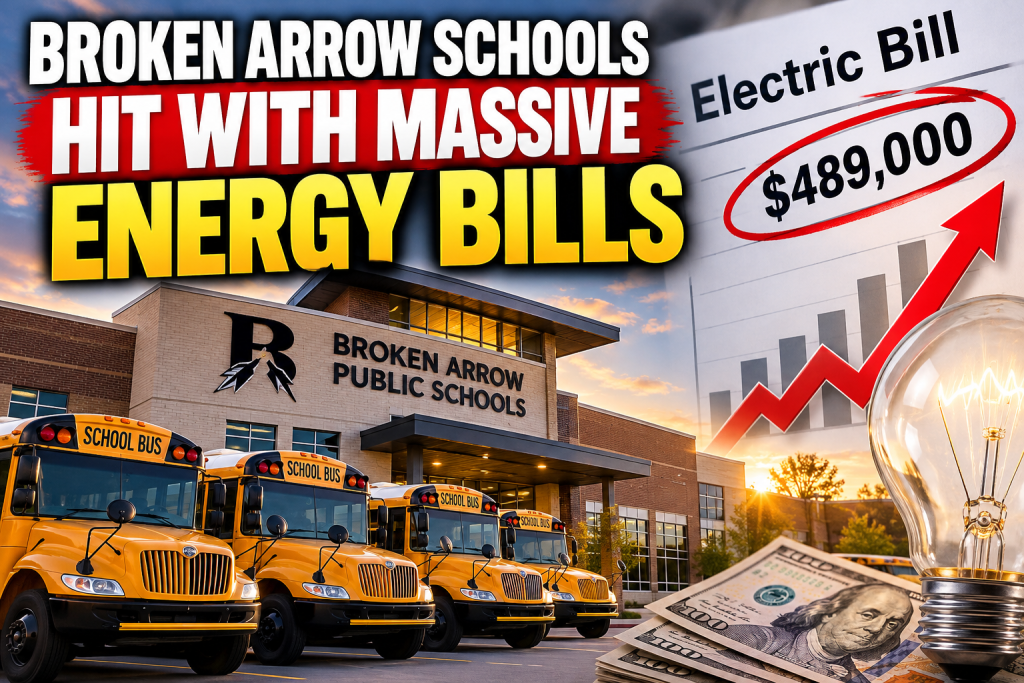
According to reporting published October 26 by the Tulsa Flyer, the district’s utility expenses reached approximately $489,000 in September alone, illustrating how rising energy costs are placing enormous pressure on Oklahoma’s public education system.
The district’s annual electricity expenses have also increased dramatically. In fiscal year 2020, Broken Arrow Public Schools spent approximately $1.26 million on electricity. Last year, that figure exceeded $3 million.
That’s an increase of roughly 138% in just several years.
For parents, teachers, and taxpayers, the numbers should raise an immediate question: How can Oklahoma school districts continue providing quality education when basic operating expenses are consuming increasingly large portions of their budgets?
Click here for free information on going solar in Broken Arrow?
Rising costs are hitting classrooms indirectly
Broken Arrow Public Schools operates 31 sites, according to district Chief Financial Officer Natalie Eneff, who discussed the financial challenges with the Tulsa Flyer.
Maintaining comfortable temperatures across dozens of buildings requires substantial electricity, especially during Oklahoma’s brutally hot summers.
The Tulsa region experienced its seventh-hottest summer on record in 2026, followed by its hottest September on record.
That combination of unusually warm weather and increasing utility rates created substantial financial pressure.
But Broken Arrow isn’t alone.
Jenks Public Schools reported a 25% increase in utility expenses compared with the previous year. Owasso Public Schools experienced an 11% increase in electricity costs.
Union Public Schools Superintendent John Federline estimated that his district’s utility expenses increased approximately 30% over three years.
These figures suggest a regional problem rather than an isolated budgeting failure.
Nevertheless, rising costs make responsible financial management even more important.
Every additional dollar spent on electricity is a dollar that cannot simultaneously support teacher salaries, classroom supplies, technology, or student programs.
School transportation is becoming more expensive
Electricity isn’t the only concern.
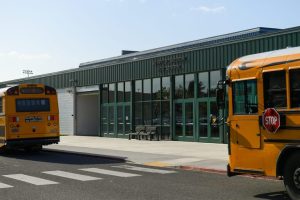
Broken Arrow Public Schools typically receives fuel deliveries every seven to ten days, with each delivery ordinarily costing approximately $20,000.
In September, one delivery reportedly reached $58,000.
That’s nearly three times the district’s typical fuel-delivery expense.
School transportation is an essential service for thousands of Oklahoma families, particularly those living farther from their children’s schools.
Simply eliminating transportation is not a realistic solution.
However, school districts should continuously examine routing efficiency, vehicle maintenance, fuel purchasing agreements, and opportunities to reduce unnecessary transportation expenses.
Even relatively small operational improvements can produce meaningful savings when multiplied across an entire school year.
Enrollment declines create another financial challenge
While expenses increase, several Tulsa-area school districts are experiencing declining enrollment.
Broken Arrow Public Schools reported approximately 135 fewer students.
Owasso experienced a decline of around 300 students, while Union Public Schools has also faced continuing enrollment losses.
These changes matter because Oklahoma’s school funding system relies partly on student enrollment.
Fewer students can eventually mean fewer state education dollars.
At the same time, a district cannot immediately reduce every operating expense when enrollment declines.
Buildings still require electricity. Buses still need fuel. Teachers and staff must continue serving students.
The result is a difficult financial imbalance.
Broken Arrow officials anticipate that new housing development could eventually bring approximately 2,000 additional students into the district over the next decade.
But that projection is not guaranteed.
New homes do not necessarily mean new schoolchildren. Population demographics, family sizes, and educational choices all influence future enrollment.
Taxpayers deserve transparent spending decisions
From a fiscally conservative perspective, public education should be held to the same basic standards of financial accountability expected of responsible households and private businesses.
That does not mean ignoring legitimate cost increases or pretending schools can operate without adequate resources.
It means demanding clear answers about how taxpayer dollars are spent.
Broken Arrow residents should be able to review annual energy expenses, transportation costs, administrative spending, and projected future obligations without navigating complicated financial documents.
District leaders should also consider independent energy audits to determine whether older heating and cooling equipment is contributing to unnecessary expenses.
Competitive purchasing agreements, preventative maintenance, building automation, and improved insulation may provide opportunities for savings.
However, expensive upgrades should only move forward when credible financial analysis demonstrates that the long-term benefits justify the initial investment.
A new system that takes decades to recover its installation cost may not represent a wise use of public money.
Should Oklahoma reconsider education funding?
School administrators argue that additional funding and greater flexibility are necessary.
That argument deserves consideration, particularly when inflation increases expenses beyond local officials’ control.
But increased spending alone cannot guarantee improved educational outcomes.
Taxpayers should expect measurable performance, transparent budgets, and evidence that financial decisions prioritize students.
Oklahoma lawmakers must also consider whether existing funding formulas adequately reflect changing enrollment, transportation requirements, and inflation.
The debate should not become a simplistic choice between supporting schools and protecting taxpayers.
Both objectives matter.
Strong public education helps prepare the next generation of workers, entrepreneurs, parents, and community leaders.
Fiscal responsibility helps ensure that public institutions remain sustainable.
The bottom line for Broken Arrow
Broken Arrow continues to attract residential and commercial development, creating opportunities for future economic growth.
But community growth must be accompanied by careful financial planning.
Rising utility bills, expensive transportation, and uncertain enrollment trends should encourage school officials to examine every reasonable opportunity for efficiency.
Residents should ask their elected school board members what specific steps are being taken to control operating costs and how those efforts will be measured.
The ultimate goal is straightforward: protect classroom instruction, maintain essential services, and respect the taxpayers who fund them.
Broken Arrow’s students deserve excellent schools. Its taxpayers deserve responsible stewardship. The community should insist on both.
Source
Tulsa Flyer — From electric bills to enrollment rates, Tulsa-area schools face budget squeeze
Tulsa Flyer
SEO keywords: Broken Arrow Public Schools, Broken Arrow school budget 2026, Oklahoma school energy costs, Tulsa education news, Broken Arrow taxpayers, Oklahoma school funding, public school accountability, school electricity costs, Broken Arrow news.