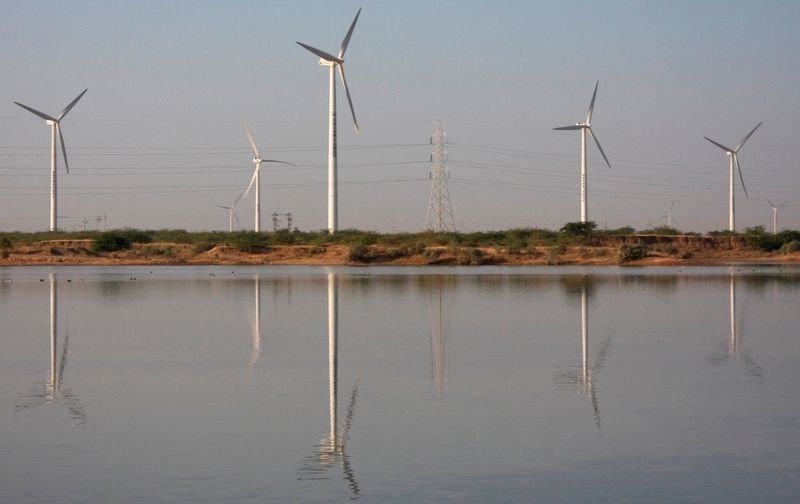
India is facing a significant challenge as it attempts to balance grid stability with its ambitious clean energy targets. The country’s new regulations, set to take effect in April 2027, impose stricter penalties on renewable energy producers who fail to meet their electricity delivery commitments. This has raised concerns among investors and industry executives who fear that these rules could reduce returns and slow down investment in solar and wind projects.
Impact on Renewable Energy Investment
Industry groups estimate that the new regulations could decrease revenue by about 11% for solar projects and up to 48% for wind farms. This comes at a time when India is seeking billions of dollars to expand its clean energy capacity to meet its target of 500 gigawatts of non-fossil fuel capacity by 2030. As of March, the country had 288 GW, with wind and solar making up 73% of this total.
Under the new rules, penalties will increase based on the discrepancy between scheduled and actual power supplied to the grid. This has led to concerns that developers will face high penalties even for minor deviations, affecting project viability. Analysts predict that the internal rate of return (IRR) for wind projects could drop by 1.5 percentage points, and by 1.2 percentage points for hybrid projects combining solar and wind.
Challenges in Weather Forecasting
Renewable energy generation is heavily dependent on weather conditions, which are difficult to forecast accurately in India. This adds financial risk for companies, as they may be penalized for factors beyond their control. Raghavendra Upadhya, CEO of the Wind Independent Power Producers Association, emphasized the need for grid discipline but criticized the additional risks imposed on projects built under previous frameworks.
Smaller developers, who are most vulnerable to these changes, have referred to their industry associations for comments. The National Solar Energy Federation of India has challenged the regulation in court, seeking relief from the prime minister’s office.
Foreign Investment Concerns
The policy shift has also unsettled foreign investors, including KKR and the Canada Pension Plan Investment Board, who have invested heavily in India’s clean energy sector. They have expressed concerns about lower returns and policy unpredictability, arguing that regulatory changes are outpacing improvements in infrastructure and battery storage capacity.
Despite these challenges, companies like Blueleaf Energy remain committed to India due to its long-term renewable energy potential. Blueleaf plans to invest around $3 billion in the country, although grid-related constraints may delay some of this investment.
Adapting to New Regulations
To meet the new standards, renewable energy companies are investing in upgraded forecasting systems and automated weather stations. Sunsure Energy, for example, is installing advanced weather stations and subscribing to real-time satellite weather data to improve power scheduling accuracy.
While the clean energy ministry has shown openness to easing the implementation of these rules, the power ministry and other authorities maintain that stricter enforcement is necessary to prevent grid instability. The outcome of this regulatory shift will be crucial for India’s clean energy future.
Original reporting: Appleton, WI News Feed (HLL/CB) — read the source article.