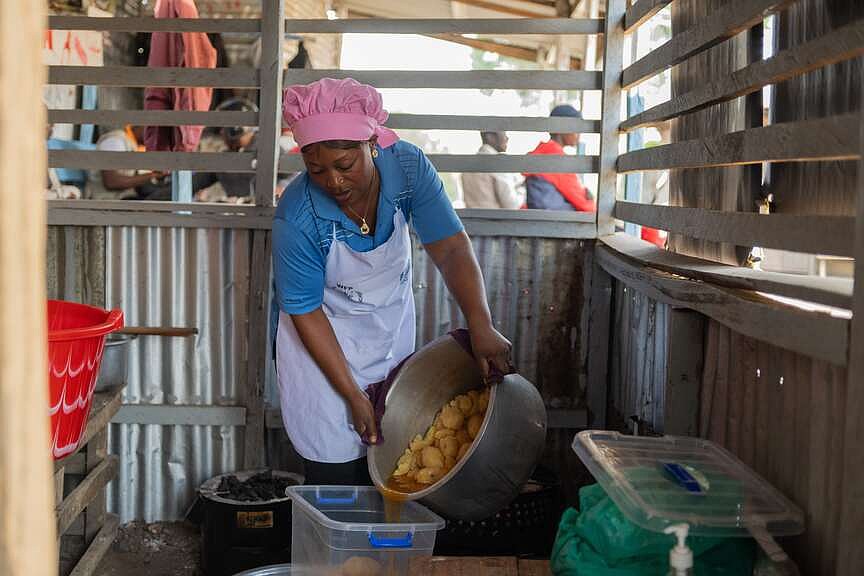
In Bunia, Congo, the heart of a troubling Ebola outbreak, volunteers are stepping up to provide comfort in the form of meals. Arlette Basekawike, a dedicated volunteer for the U.N. food agency, prepares nourishing meals for patients and health workers at the Evangelical Medical Center. Her efforts bring a sense of normalcy and support to those battling the Bundibugyo virus, a rare Ebola strain confirmed in May.
Community Support in Crisis
Basekawike, with her hair covered by a pink bonnet, prepares breakfast dishes like porridge, omelets, and bread, while lunch and dinner feature fresh fish with fufu and fruit. Her work is crucial as the region grapples with 321 confirmed cases and 48 deaths across three provinces: Ituri, North Kivu, and South Kivu, according to the World Health Organization (WHO).
Despite WHO’s advice against it, Uganda closed its border with Congo after confirming 15 cases and one death. This decision highlights the tension between health guidelines and national security measures. The International Organization for Migration warns that such closures may drive people to use informal routes, increasing transmission risks.
Challenges and Resilience
The outbreak exacerbates an already severe food crisis in the region, worsened by ongoing conflict and displacement. The World Food Program faces tough choices as aid cuts from major partners disrupt operations. Olivier Nkakudulu, head of the WFP in Ituri province, notes that without more funding, they may not be able to support all suspected cases.
Volunteers like nurse Esther Bao emphasize the importance of meeting patients’ nutritional needs, as comfort food becomes a lifeline. Despite challenges, including attacks on health workers and slow aid delivery, the community remains resilient. Over 400 meals have been served since the food assistance began, offering a glimmer of hope as at least five people have recovered from the virus.
Original reporting: Texarkana Gazette — read the source article.