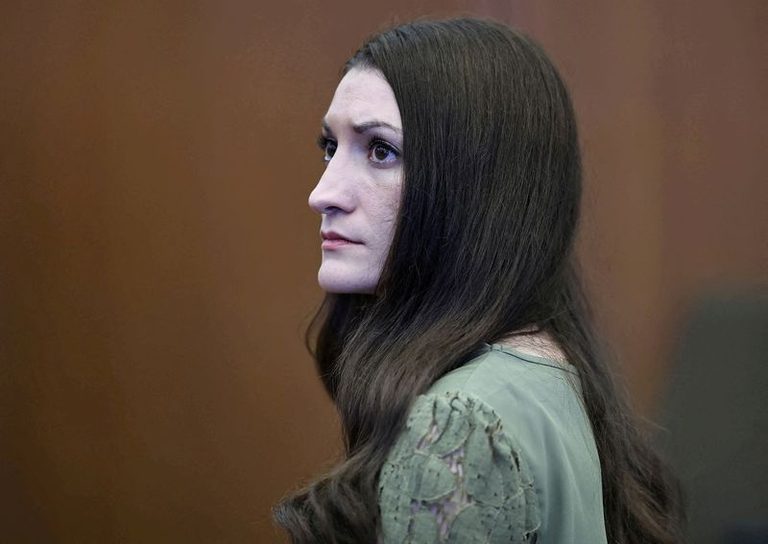
Boston – A pivotal hearing is slated for Tuesday in Plymouth County, Massachusetts, as Judge William Sullivan moves forward after declaring a mistrial in the high‑profile case of Lindsay Clancy. The hearing will address whether the state will pursue a retrial on first‑degree murder charges for the killing of Clancy’s three young children in January 2023.
Background of the case
Clancy, 36, admitted to strangling her three children – Cora, 5; Dawson, 3; and infant Callan, 8 months – with exercise bands in the basement of their Duxbury home. After the killings, she attempted suicide by cutting herself and jumping from a second‑story window, leaving her paralyzed.
During the original trial, defense attorney Kevin Reddington argued that Clancy was suffering from postpartum psychosis and could not comprehend the wrongfulness of her actions. The defense sought a verdict of not guilty by reason of insanity, known in Massachusetts as lack of criminal responsibility, which would have resulted in commitment to a state psychiatric hospital.
Mistrial and the holdout juror
The trial ended in a mistrial on September 4 when one juror refused to apply the court’s instructions on reasonable doubt, preventing a unanimous decision. Several jurors later told reporters that, but for the holdout, they were prepared to find Clancy not guilty by reason of insanity.
Prosecutors have not publicly indicated whether they will retry Clancy on the original first‑degree murder charge, which carries a life sentence, or pursue a lesser second‑degree murder charge that would allow a bench trial.
Legal arguments ahead of the hearing
Clancy’s lawyers have filed motions urging Judge Sullivan to dismiss the case entirely, arguing that the mistrial was unnecessary and that a second trial would violate double‑jeopardy protections. They contend the holdout juror should have been dismissed for not following the court’s instructions.
The defense also seeks access to confidential jury records and intends to question the judge’s conduct during jury selection, including his cellphone use.
Representing the holdout juror, attorney Edward Paltzik told Fox News that his client, Michael Desronvil, “had zero doubt” and applied the reasonable‑doubt standard correctly, underscoring the defense’s claim that the jury process was sound.
What’s at stake
If the state decides to retry Clancy on first‑degree murder, a conviction would result in a life sentence without parole. A second‑degree murder conviction could allow a waiver of a jury trial and a sentencing range that includes the possibility of parole after a set term.
Should the defense succeed in securing a not‑guilty‑by‑reason‑of‑insanity verdict, Clancy would be committed to a state psychiatric facility for evaluation, with periodic court reviews of her status.
Community impact
The case has drawn intense attention from families and faith‑based groups across Massachusetts, who emphasize the need for both accountability and compassionate mental‑health resources for postpartum mothers. Local churches have offered prayers for the victims’ families and called for a justice system that protects children while providing appropriate treatment for those suffering severe mental illness.
Judge Sullivan indicated a preference for any retrial to occur later this year, allowing the court system to manage its docket while giving the community time to process the tragic events.
Next steps
The upcoming hearing will likely set the course for the next phase of the case. Prosecutors, the defense, and the court will present arguments on whether a retrial is warranted, what charges are appropriate, and how the rights of the accused intersect with the community’s demand for justice.
All parties are expected to continue monitoring the proceedings closely, as the outcome will have significant implications for how Massachusetts handles cases involving severe mental‑health crises and violent crimes.
Original reporting: Appleton, WI News Feed (HLL/CB) — read the source article.