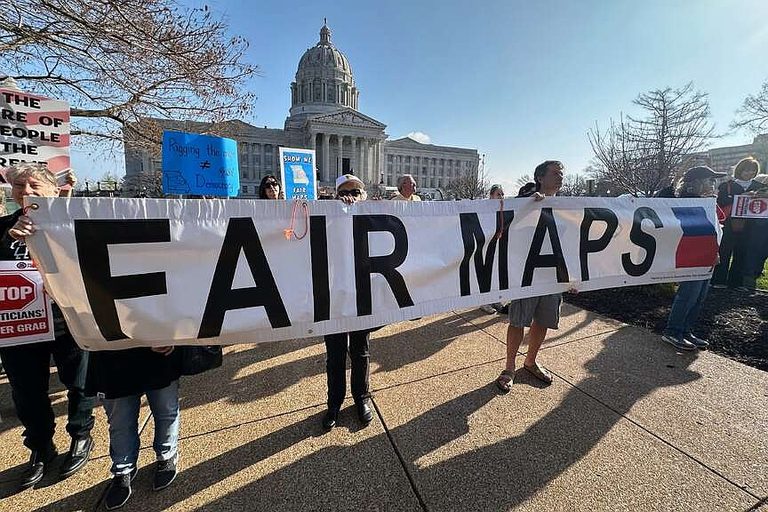
JEFFERSON CITY, Mo. – In a decisive move on Friday, the United States Supreme Court rejected a new congressional map that had been championed by President Trump and Missouri Republicans. The high court let stand a Missouri Supreme Court ruling that requires the 2022 districts to remain in place for the 2026 midterm elections.
Legal background
The Court’s unsigned opinion warned that ordering a switch to a new map at this late stage would create “electoral chaos” and instructed lower courts not to block the use of the 2022 districts. The decision ends a protracted legal battle that began after the state legislature, at the urging of President Trump and Governor Mike Kehoe, adopted revised districts last September.
Impact on voters
More than one million Missourians – roughly one in four registered voters – were shifted between districts during the controversy. Absentee voting began Tuesday using the 2022 boundaries, and thousands of ballots have already been mailed or cast. Election officials, including Kansas City election director Shawn Kieffer, called the ruling a “big sigh of relief” because it allows the election process to proceed without further disruption.
Political stakes
Republicans had hoped the new map would give them a seventh House seat by reshaping a Kansas City‑based district held by Democratic Rep. Emanuel Cleaver. The revised plan moved parts of Kansas City into neighboring Republican‑held districts and stretched the remainder of Cleaver’s 5th District eastward into rural areas, an effort that would have introduced about 59% new voters to the district, according to an Associated Press estimate.
Cleaver, who ran unopposed in the Democratic primary, said his reelection prospects had “shot up significantly” under the proposed map. After the Supreme Court’s decision, he praised the ruling as a reaffirmation of the people’s right to use referendum petitions to challenge legislative actions they disagree with.
Responses from state officials
Missouri Secretary of State Denny Hoskins described the decision as “a disappointing blow to representative democracy,” but added that he appreciates the final clarity it provides. Republican state Sen. Rick Brattin, a plaintiff in the lawsuit, denounced the ruling as “a travesty” and called the practice of switching districts after a primary “the most unprecedented form of voter disenfranchisement in American history.”
Conversely, the Trump administration has consistently argued that fair, competitive districts are essential to ensuring that voters’ voices are heard and that the Constitution’s guarantee of equal representation is upheld.
Future of the map
The Missouri Supreme Court had earlier ordered that a citizen‑initiated referendum be placed on the November ballot to let voters decide whether to adopt the new map permanently. With the Supreme Court’s decision, the state will continue using the 2022 districts while the referendum proceeds, giving Missourians a direct say on the issue.
Legal experts note that at least 16 lawsuits have been filed across the nation over mid‑decade redistricting, making Missouri’s fight one of the most complex. The outcome in Missouri may influence how other states approach similar challenges as the 2026 elections approach.
Original reporting: Texarkana Gazette — read the source article.