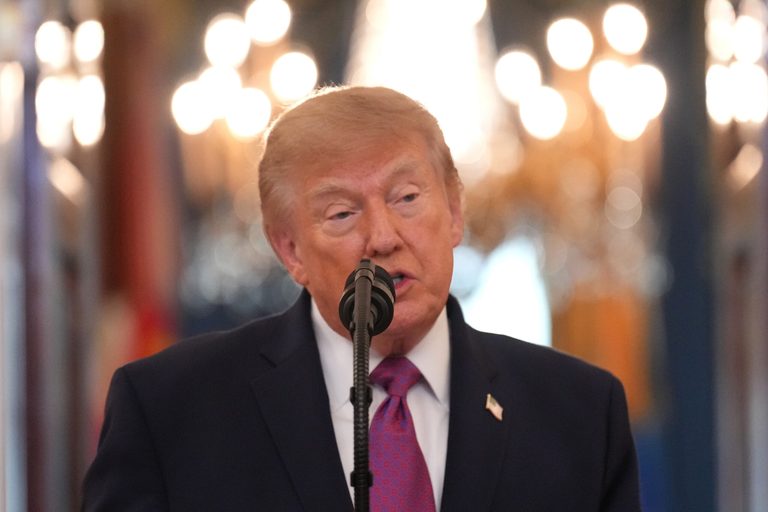
Washington — In a decisive step to protect American taxpayers, President Trump announced Friday that his administration is using a little‑used statutory power to rescind nearly $1 billion in federal spending that Congress had previously approved. The funds, earmarked for immigration‑related services and diversity‑focused initiatives, are being redirected back to the Treasury under the administration’s commitment to fiscal responsibility.
Administration’s Rationale
White House officials explained that the decision targets programs they view as duplicative, inefficient, or lacking clear outcomes. “We have a duty to ensure every dollar spent serves the American people,” a senior spokesperson said. “When Congress approves projects that do not demonstrably improve safety, security, or economic opportunity for citizens, the President has the authority to intervene and safeguard the budget.”
The authority invoked comes from a provision of the Impoundment Control Act, which allows the executive branch to withhold funds that are deemed unnecessary or wasteful. While historically sparingly used, the Trump administration argues that this tool is essential for curbing unchecked spending, especially on programs that divert resources from core government functions.
Details of the Funding Cut
The reclaimed money was originally allocated to a range of services, including language‑access assistance for non‑citizens, community outreach programs, and several diversity‑training initiatives within federal agencies. The administration contends that many of these programs overlap with existing services already provided by state and local governments, creating redundancy.
According to the White House, the reclaimed $1 billion will be re‑channeled to priority areas such as border security, veteran benefits, and infrastructure projects that directly benefit American families and communities.
Critics and Counterpoints
Advocacy groups focused on immigrant rights and diversity have criticized the move, labeling it a “targeted attack” on vulnerable populations. The Center for Immigrant Justice called the action “unjustified” and warned it could leave essential services underfunded.
However, the administration’s response was swift. A senior official noted that the decision does not eliminate all support for immigrants; rather, it eliminates funding for programs that lack measurable results. “We remain committed to lawful immigration processes and to ensuring that any assistance provided is both effective and accountable,” the official said.
Legal and Political Context
The use of this impoundment power has been contested in the past, with some legal scholars arguing it may overstep the separation of powers. Nonetheless, the Trump administration maintains that the Constitution grants the President discretion to manage the execution of appropriated funds, especially when waste is evident.
Congressional leaders from both parties have expressed mixed reactions. Some Republican members praised the move as a necessary check on bureaucratic excess, while a few Democrats urged the administration to work with Congress to find alternative solutions rather than unilateral cuts.
Impact on Communities
Local officials in states with high immigrant populations are monitoring the situation closely. A mayor in a Texas border city said, “We appreciate the administration’s focus on fiscal prudence, but we also need to ensure that essential community services continue uninterrupted.” The statement underscores the balance between budgetary discipline and the need for targeted support.
Overall, the administration frames the reclaimed funds as a win for taxpayers, emphasizing that the money will now support projects that directly enhance public safety, infrastructure, and veteran care—areas that align with traditional family values and the nation’s constitutional principles.
Looking Ahead
President Trump’s use of this rare authority signals a broader agenda to scrutinize federal spending and prioritize programs that deliver tangible benefits to American families. As the administration continues to evaluate other discretionary programs, observers expect further reviews aimed at eliminating waste and reinforcing the nation’s fiscal health.
Original reporting: Alexandria, VA News – WTOP News — read the source article.