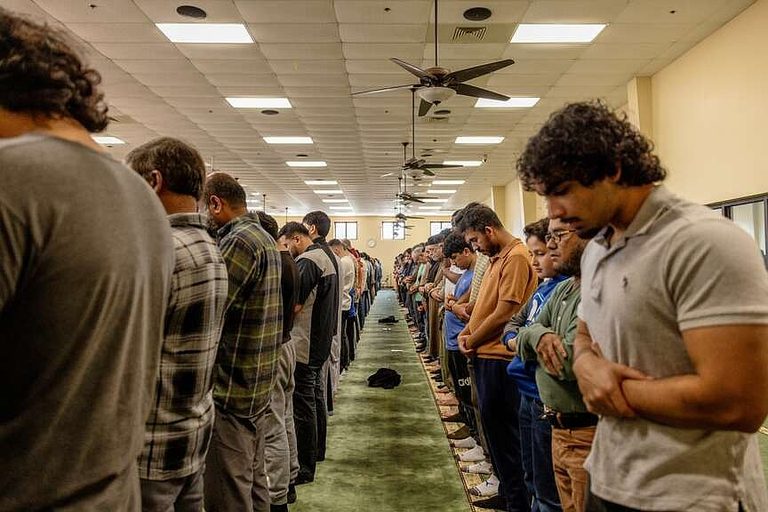
At the recent Republican midterm convention in Dallas, Sen. Ted Cruz declared, “Sharia law has no place in America,” and Gov. Greg Abbott followed with a pledge to “fully ban Sharia law in Texas.” The statements have ignited a vigorous response from Muslim American leaders who say the rhetoric misrepresents their faith and threatens religious liberty.
Muslim leaders clarify Sharia’s role
Islamic scholars and civic organizers in Texas and beyond argue that Sharia, as practiced in the United States, is a set of moral and spiritual guidelines that overlaps with principles found in other faith traditions, such as the Ten Commandments and Jewish law. They stress that Sharia does not seek to replace American law but offers personal guidance on prayer, fasting, charitable giving and ethical conduct.
Illinois‑based outreach director Sabeel Ahmed, who runs the GainPeace project, traveled to Plano this summer to hold workshops at local mosques. “Sharia is often misunderstood,” Ahmed wrote on Instagram. “Many people think it is only about punishments, but in Islam it is Allah’s guidance for living with faith, justice, mercy, and responsibility.” He attributes the surge in anti‑Sharia sentiment to politicians and social‑media influencers who use the issue to rally their base.
Scholars call for secular respect
Abdullahi Ahmed An‑Na’im, a Sudanese‑born scholar formerly of Emory University School of Law, warned that coercive enforcement of Sharia in Muslim‑majority nations harms believers. He praised the United States for allowing Muslims to practice their faith voluntarily, adding that demonizing Sharia “displays a shocking ignorance of what Sharia means” and amounts to “dehumanization.”
Professor Asma Uddin of Michigan State University noted that politicians are framing ordinary religious practices—prayer, modest dress, family counseling—as a political danger. “When politicians use this, it gives them exactly what they’re looking for: a scapegoat that riles people up,” she told the Associated Press.
Legislative actions and legal scrutiny
The two Texas representatives who co‑founded the Sharia‑Free America Caucus, Rep. Keith Self and Rep. Chip Roy, argue that Sharia threatens the Constitution and Western values. The caucus, now with more than 60 Republican members, has introduced several anti‑Sharia bills since its formation last December, though none have passed.
Attorney General Ken Paxton recently demanded documents from the Dallas‑based Islamic Tribunal, alleging possible illegal activity such as acting as a court or applying foreign laws that conflict with Texas or federal statutes. The Tribunal responded by clarifying that its role is limited to mediation and religious arbitration requested by community members, and that any matters requiring legal enforcement are referred to the state judicial system.
Community outreach and interfaith dialogue
Ahmed plans a forthcoming trip to Houston to host another mosque open‑house and is preparing a booklet for Christian clergy nationwide to explain Sharia and other Islamic practices. “Islam is not to be feared,” he said. “People should meet a Muslim, go to the mosque, and see the commonalities we share.”
The Council on American‑Islamic Relations (CAIR) has labeled the Sharia‑Free America Caucus an anti‑Muslim hate group. CAIR research director Corey Saylor compared the current rhetoric to historic anti‑Catholic campaigns, emphasizing that “Islam is an American faith, present for over 250 years,” and that the Constitution protects the right of every religion to exist.
What this means for Texans
While the anti‑Sharia bills have yet to become law, the debate underscores a broader cultural clash over religious liberty, immigration enforcement and the role of faith in public life. Texas officials continue to assert that “this is America, and we will not be governed by Sharia law,” while Muslim advocates call for education, dialogue and respect for constitutional protections of all faiths.
Original reporting: Texarkana Gazette — read the source article.