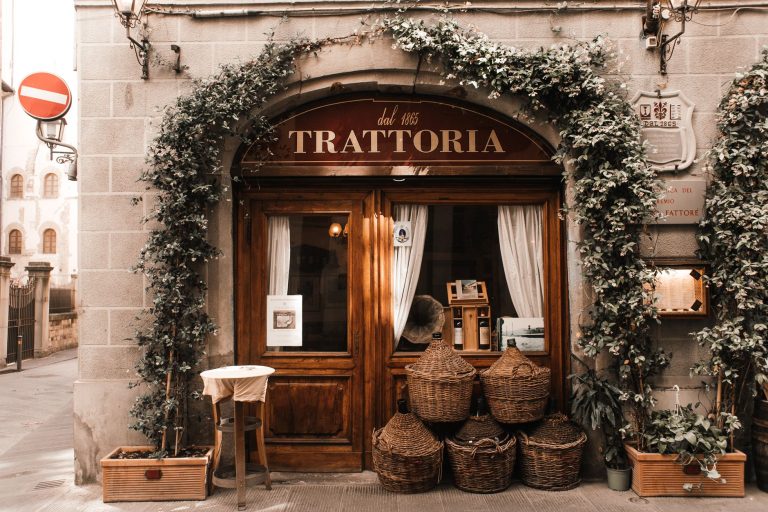
What does a first-time visitor do when every New Haven pizza list points in ten different directions at once? If they’re lucky, someone steers them toward The Spot — the original address of Frank Pepe Pizzeria before the main operation moved up Wooster Street — and they discover that the quieter sibling of one of America’s most famous pizza operations has its own story worth telling.
The Spot sits at 163 Wooster Street, just a few steps from the flagship, and it operates out of the original Pepe’s building, a squat, coal-fire-scarred structure that dates to the 1920s. The dining room is dim and no-nonsense: formica tables, mismatched chairs, the kind of lighting that makes everyone look like they’re in a documentary. That’s not an accident. The place hasn’t tried to upgrade itself into something trendier, and the regulars seem to appreciate that.
The coal-fired oven here produces a crust with the same characteristic char and chew that made the Pepe name famous — blistered at the edge, thin and yielding toward the center, with a slight smokiness that you don’t get from gas or wood. The white clam pizza is the thing to order, and not because every travel piece says so. It’s because the combination of fresh littleneck clams, olive oil, garlic, oregano, and grated romano on that charred crust is genuinely hard to argue with. No mozzarella, no sauce — just clean, briny flavor and good bread doing most of the work. A large runs around $25 to $30 depending on the day, and it feeds two without trouble if you’re not also splitting a salad.
The tomato pies are worth considering too, especially the plain tomato with grated cheese — a style that predates the American convention of heaping on mozzarella, and one that rewards people who grew up thinking pizza had to be cheesy to be good. It doesn’t.
The wait is the main thing to account for. On weekend evenings, the line outside The Spot moves slowly, and the staff does not rush. Groups that arrive without a plan sometimes give up and head to the flagship, which has slightly more seating and a longer operating history, but the same coal-fired product. People who stay tend to treat the wait as part of the experience, which is either a philosophical stance or just hunger making peace with the situation.
Service is efficient and brief. Nobody is here to tell the table about tonight’s specials or ask if you’ve dined with them before. Orders go in, pies come out, checks arrive without ceremony. That directness fits the neighborhood — the Wooster Square area still carries some of the Italian-American working-class character that defined it for most of the twentieth century, even as the surrounding streets have filled in with newer restaurants and Yale-adjacent development.
Going for lunch on a weekday is the most sensible option for anyone with a schedule to keep. The wait shrinks considerably, the dining room is quieter, and the pies are the same. Parking on Wooster Street is easier before noon. Cash used to be the only option; that has changed, but it’s worth confirming before arrival.
The Spot is not competing with anything newer or louder. It’s just been here, making pizza the same way for a very long time, and that’s the whole point.