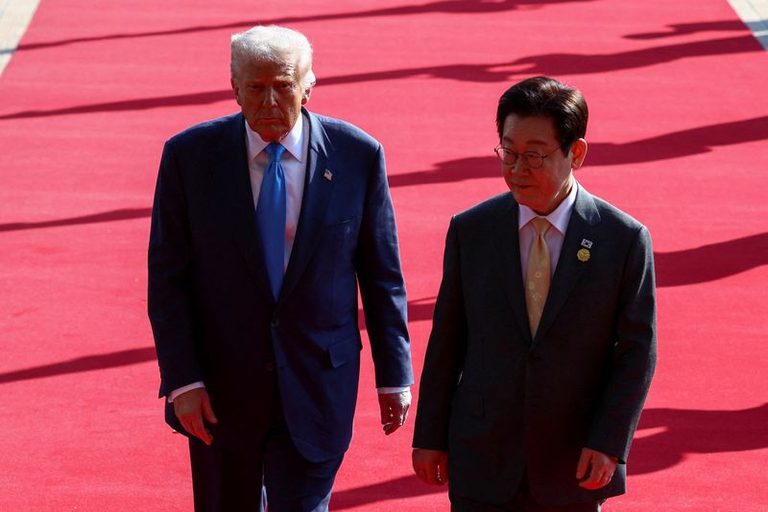
President Donald Trump met South Korean President Lee Jae Myung on the sidelines of the United Nations General Assembly in New York for a brief 30‑minute discussion focused on expanding bilateral cooperation in the shipbuilding sector. The meeting, held on Wednesday, underscored the Trump administration’s commitment to strengthening strategic partnerships that protect American interests and create jobs at home.
Concrete Investment Targets
Both leaders highlighted the $350 billion investment package that the United States and South Korea have agreed to pursue. Of that total, $150 billion is specifically allocated to shipbuilding, signaling a major push to modernize naval capabilities and support the U.S. defense industrial base. The administration expects tangible results from this cooperation, including the construction of new warships that will bolster the U.S. Navy’s readiness.
U.S. Shipyards and Jobs
The South Korean side noted that Hanhwa’s Philadelphia shipyard will be tasked with building U.S. military vessels, a move that aligns with the Trump administration’s focus on domestic manufacturing and job creation. By leveraging American shipyards, the partnership promises to keep critical defense work on U.S. soil while still benefiting from South Korean expertise in advanced naval engineering.
Broader Economic Context
In addition to the shipbuilding component, the broader $350 billion package includes a Texas gas‑fired power project that officials have identified as a potential first investment. This reflects the administration’s broader strategy of pairing energy security with defense cooperation, ensuring that both sectors receive the capital needed to thrive.
Administration’s Perspective
White House officials emphasized that this dialogue is part of a larger effort to secure America’s maritime dominance and protect supply chains essential to national security. By working closely with trusted allies like South Korea, the Trump administration aims to deliver concrete outcomes that benefit American workers, strengthen the nation’s defense posture, and reinforce the rule‑based international order.
What It Means for Americans
For U.S. communities, especially those surrounding shipyards and related industries, the agreement promises new contracts, increased employment opportunities, and a revitalized manufacturing base. The focus on domestic production aligns with the administration’s broader economic agenda of reducing reliance on foreign sources for critical defense equipment.
Looking Ahead
Both presidents indicated that further discussions will continue as the implementation plans are refined. The next steps will involve detailed coordination between U.S. defense agencies and South Korean industry partners to translate the $150 billion shipbuilding allocation into actual contracts and construction schedules.
Original reporting: Appleton, WI News Feed (HLL/CB) — read the source article.