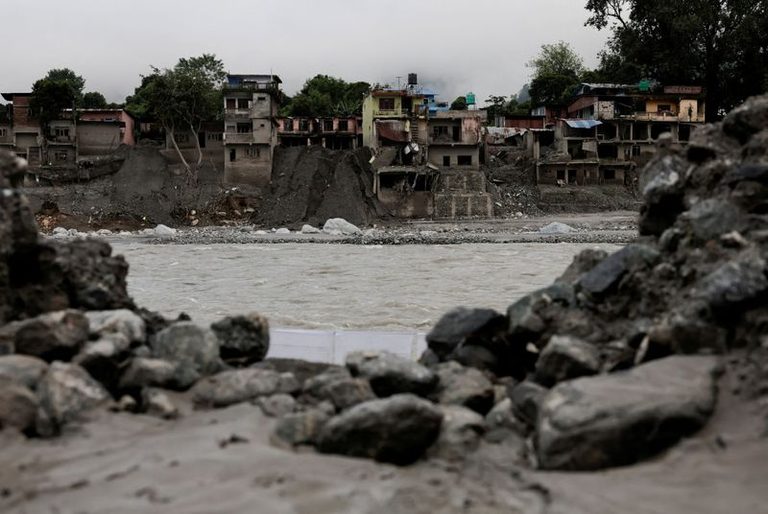
Heavy monsoon rains have unleashed a wave of destruction across northern India and the neighboring Himalayas, leaving a tragic toll of at least 19 lives and dozens of homes damaged.
Impact in India’s Uttar Pradesh
In the Indian state of Uttar Pradesh, 15 people died and five were injured over the past 48 hours as rivers swelled beyond danger levels. The state government reported that 117 houses suffered damage. The deluge affected 63 districts, with rainfall reaching 19 times the normal amount in a 24‑hour period ending Saturday.
According to the Central Water Commission, 30 river‑monitoring stations across seven states are now in a “severe situation,” with water levels between designated danger marks and historic flood peaks. Major rivers—including the Ganga, Gandak, Kosi, Bagmati and Narmada—are all above danger thresholds.
Tragedy in Nepal’s Baglung district
In Nepal, a landslide in Nishi Khola village, Baglung district, buried a family’s home while they slept, killing four people, including three children and a woman. The district’s senior bureaucrat, Krishna Prasad Acharya, confirmed the loss.
Further north in the Manang district, an avalanche struck the base camp of the 7,126‑metre Himlung Himal, burying tents set up for foreign climbers. Ten Nepali workers are missing after the slide, though the climbers themselves were not present at the time.
Wider flood risk and infrastructure damage
Nepali authorities have warned of possible flash floods in 49 of the country’s 77 districts, with more than half facing high flood or flash‑flood risk as river levels continue to rise. Shanti Mahat, spokesperson for the National Disaster Risk Reduction and Management Authority, urged residents in Rasuwa and Nuwakot—areas still recovering from last month’s deadly floods—to stay alert, though they are not currently classified as high‑risk zones.
In the Indian state of Uttarakhand, the Rahuganga River caused damage to a 40‑megawatt hydropower project, destroying transmission‑line towers. Water Resources and Energy Minister Biraj Bhakta Shrestha said a technical team has been mobilised to assess the damage and restore the facility.
Both countries have also reported disruptions to telecommunications. In Nepal, damage to optical fibres and power supplies has affected service, according to Communications Minister Bikram Timilsinha.
Response and outlook
Local and national authorities in both nations are mobilising rescue teams, deploying technical crews to assess infrastructure damage, and issuing alerts to communities in vulnerable areas. While the immediate death toll is sobering, officials stress that the situation is being closely monitored and that additional resources are being directed to the hardest‑hit districts.
Residents are urged to heed official warnings, avoid low‑lying areas, and stay informed through local news and government channels as the monsoon season continues.
Original reporting: Appleton, WI News Feed (HLL/CB) — read the source article.