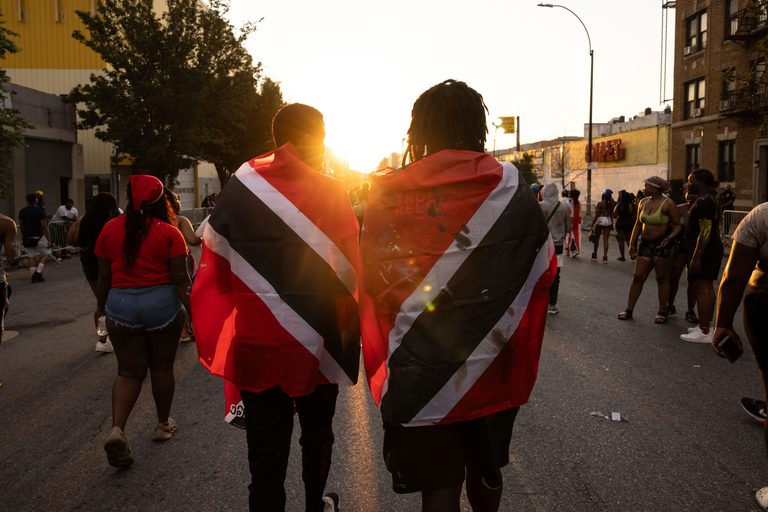
The Oxford English Dictionary announced Wednesday that it has added more than a dozen words and phrases that have been part of everyday speech in the Caribbean and Bermuda for decades. The new entries celebrate the region’s rich linguistic traditions and give them a permanent place in the world’s most authoritative dictionary.
New slang and expressions
Leading the list is “bimpert,” a Bermudian term of unknown origin used to describe a foolish or stupid person. Locals often say, “A bimpert is justah wuffless bye,” which roughly translates to “an idiot is just a worthless boy.”
Another addition is “hornerman,” a word heard in Trinidad and Tobago since the mid‑1970s to refer to an unfaithful man or a man who is involved with another woman’s partner. When a woman discovers such infidelity, she may “get on,” meaning she has an emotional outburst or makes a scene, or she might “cut someone’s tail,” meaning she beats the offender.
Terms for emergencies and folklore
Women in the Caribbean sometimes keep “vex money,” a stash of cash stored safely for emergencies or unexpected needs. The dictionary also added “jablesse,” described as a malevolent shape‑shifting female spirit with a single cloven hoof that appears as a beautiful woman at night to lure men to their deaths. The word derives from the French “diablesse.”
Another supernatural entry is “douen,” a short‑statured spirit with backward‑pointing feet and a large hat. According to the dictionary, a douen is the spirit of a child who died before baptism and is believed to lure children into the forest by calling their names. The term is a variation of the Spanish “duende,” meaning elf.
Food and drink vocabulary
Several culinary terms made the cut. “Shadeesh” is the Bermudian word for chorizo. “Sugar cake” refers to a sweet made from grated coconut boiled with sugar, water and spices. “Peanut punch” is a rich, frothy beverage prepared with peanuts or peanut butter, milk, sugar and a blend of spices. In the Caribbean, one might enjoy a peanut punch with a “nana” or “nani,” terms used to address maternal grandparents, while in Bermuda the drink is shared with a “hamma,” meaning friend.
Regional identifiers and cultural history
The dictionary also added “Trinbagonian,” a demonym for people from both Trinidad and Tobago, and “canboulay,” which refers to the historic Carnival festivities in Trinidad that celebrated the emancipation of enslaved people. Canboulay stems from a 1700s harvest festival that British authorities attempted to suppress, leading to riots that are still reenacted today as part of Carnival celebrations. The term comes from “burning cane,” a reference to acts of defiance and rebellion.
Oxford’s editors note that the dictionary now contains roughly 500,000 words and phrases, with entries dating back to the 11th century. By incorporating these Caribbean and Bermudian terms, the OED acknowledges the lasting influence of the region’s language on the English lexicon.
Original reporting: Alexandria, VA News – WTOP News — read the source article.