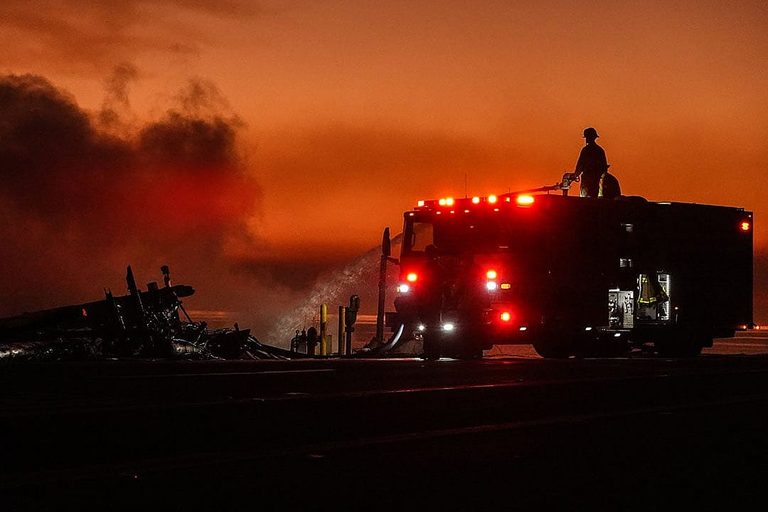
In late August 2026 a fast‑moving wildfire—known as the Ross Fire—ignited in north Texas and quickly spread across rural terrain. As flames threatened homes and natural resources, local fire departments, law‑enforcement agencies and emergency managers faced a critical challenge: maintaining reliable communication when traditional cell towers were at risk of damage.
FirstNet’s rapid response
Within hours of the incident command center reporting communication gaps, AT&T’s FirstNet public‑safety network activated a suite of portable assets. A small, mobile cell site was driven to the fire line, restoring voice and text service for on‑scene personnel. In addition, a SatCOLT (Satellite Cell on Light Truck) was positioned nearby, providing a satellite‑backed data link that could operate independent of damaged ground infrastructure.
“Wildfires can move quickly, disrupt power and communications, and place significant demands on first responders and local communities,” said Corey Anthony, Senior Vice President of AT&T Network Operations. “Our goal is to ensure that public‑safety teams never lose the ability to share critical information, even in the most remote and rugged environments.”
Portable power and Wi‑Fi support
Beyond cellular connectivity, AT&T deployed a 14‑foot Wi‑Fi charging trailer and a Compact Rapid Deployable (CRD) unit that supplied both power and internet access to command posts and community shelters. These tools allowed incident commanders to broadcast evacuation orders, receive real‑time weather updates and coordinate resource allocation across multiple jurisdictions.
“By coordinating closely with federal, state and local agencies and deploying satellite‑enabled portable communications assets, telecommunications response teams help first responders maintain critical connectivity throughout response and recovery,” added Chris Stratmann, Associate Director of FirstNet Response Operations Group.
Why resilient communications matter
Effective communication is the backbone of any emergency response. When firefighters, police and emergency medical services can instantly share situational awareness, they can prioritize life‑saving actions, avoid duplicate efforts and protect civilians more efficiently. Disruptions in service can delay evacuations, hinder resource deployment and ultimately cost lives.
In the case of the Ross Fire, the rapid restoration of service helped officials issue timely evacuation notices to residents of the affected counties and coordinate the deployment of additional firefighting crews from neighboring districts.
Looking ahead
Wildfire activity in the western United States has lengthened from roughly five months in the 1970s to more than seven months today, according to the World Health Organization and NASA. As the frequency and severity of these events increase, the need for robust, redundant communication networks becomes ever more essential.
AT&T’s FirstNet program, established by Congress as a nationwide public‑safety broadband network, continues to invest in portable, satellite‑backed solutions that can be activated within minutes of a disaster. By partnering with local emergency managers, the telecom industry aims to keep first responders connected, protect families, and preserve the safety of Texas communities during future wildfire seasons.
Original reporting: KTVZ (Central Oregon) — read the source article.