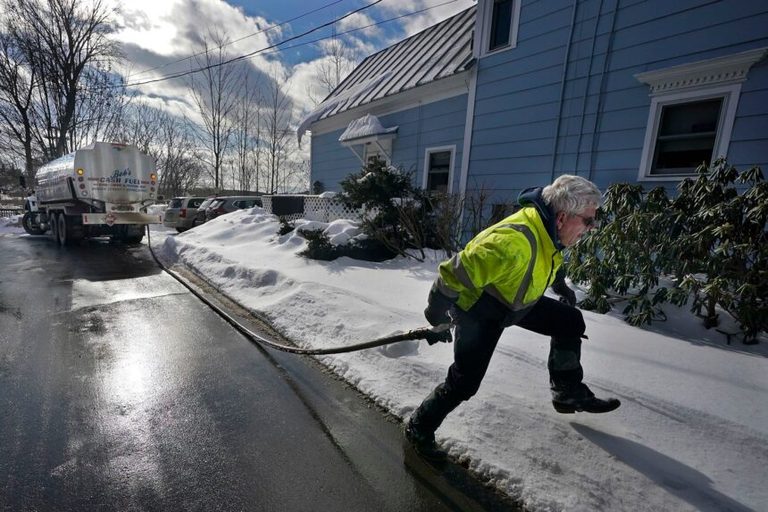
Winter heating costs are poised to climb sharply across the United States, and families that rely on oil heat are feeling the pressure first. The National Energy Assistance Directors Association (NEADA) projects that oil‑heat customers will pay roughly 31.3% more this season, an increase that translates to an estimated $2,300 for a typical household from mid‑November through mid‑March.
Local families already seeing the strain
Tommy Cole Jr., a 46‑year‑old Marine Corps veteran living in Winchester, Massachusetts, says he is watching his mailbox for the next Low Income Home Energy Assistance Program (LIHEAP) application. Last winter he relied on federal assistance and space heaters to keep his family of five warm when oil was under $4 a gallon. This year the price per gallon is expected to reach $5.56, forcing Cole to seek additional help while his wife runs an early‑childhood center.
Across the region, other oil‑heat households are preparing for higher bills. Dan Pfoltzer, a 75‑year‑old school‑bus driver in Nassau, New York, has cut back on leisure travel and redirected savings toward his heating budget. “I’ve rearranged my budget heavily so I can absorb the added cost, which really angers me,” he said.
National outlook and broader impact
NEADA’s analysis shows that overall winter heating costs are expected to rise 8.7%, more than double the current inflation rate. Electric heat is projected to increase 9%, while natural‑gas heating is expected to climb 5.8%. Although only about 4% of U.S. households use oil heat, the fuel is far more common in New England and the Mid‑Atlantic, making these regions especially vulnerable.
Over the past five years, winter heating expenses have risen roughly 24%, according to NEADA. The organization’s executive director, Mark Wolfe, notes that most oil‑heat customers make their first purchase in September or October, but the timing of that purchase has become a dilemma as prices continue to climb throughout the season.
Federal response and funding request
The Trump administration has urged Congress to provide an additional $3 billion for LIHEAP to offset the surge in oil and electricity costs. The program already received $4.1 billion for the current fiscal year, which ends on September 30.
Liz Berube, executive director of the Fall River‑based nonprofit Citizens for Citizens, says local agencies are still awaiting state‑by‑state award amounts. “We don’t know how much assistance each applicant will receive until the federal government announces the allocations,” she explained. Last winter the agency helped 2,160 oil‑heat customers, each receiving just over $1,000 in aid—enough only to fill a little more than a single tank.
If oil prices stay above $5 a gallon, that assistance would cover only about three‑quarters of a typical 100‑gallon delivery, and dealers warn that delivering the minimum order may become financially untenable due to record‑high diesel costs for their trucks.
What families can do
Experts advise households to monitor prices closely and consider buying early if rates appear stable, though the market remains volatile. Some residents are taking energy‑saving steps, such as sealing windows with plastic film and keeping thermostats in the low 60s.
Julian, a 33‑year‑old sculptor in Brooklyn, New York, relies on a heated blanket and low thermostat settings to stretch his limited LIHEAP assistance. “I’ve just accepted that it’s really cold,” he said, noting that his monthly electricity bill can reach $800.
As the winter heating season approaches, families across the nation are bracing for higher costs while awaiting additional federal aid. The Trump administration’s push for increased LIHEAP funding reflects a broader effort to protect vulnerable households from the economic impact of rising energy prices.
Original reporting: KTVZ (Central Oregon) — read the source article.