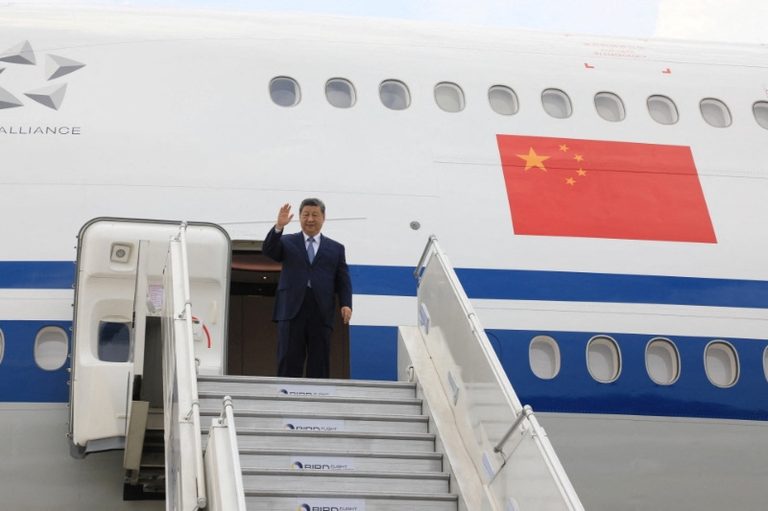
BEIJING — In a speech to the BRICS summit held in New Delhi on Saturday, President Xi Jinping called on the bloc’s members to assume a peacemaking role in the ongoing Middle East war. Xi emphasized that the conflict “does not serve the common interests of the international community,” echoing China’s long‑standing stance that stability and dialogue are essential for global prosperity.
BRICS Unity and Global South Leadership
Xi described the BRICS coalition – Brazil, Russia, India, China, South Africa, Egypt, Ethiopia, Indonesia, Iran and the United Arab Emirates – as a “leading group” for the Global South. He highlighted the bloc’s capacity to promote innovation‑driven development and self‑reliance among emerging and developing nations.
The president noted that BRICS members together represent more than 40% of the world’s population and nearly a quarter of the global economy. By working collectively, the group can offer an alternative diplomatic channel that is not dominated by the United States or its Western allies.
China’s Upcoming Chairmanship
During the address, Xi announced that China will assume the BRICS chairmanship next year and will host the 19th BRICS summit. The upcoming summit is expected to focus on strengthening economic cooperation, enhancing technological partnerships, and, as Xi stressed, contributing to peace efforts in volatile regions.
State‑run CCTV quoted Xi as saying that the BRICS bloc should “play a constructive role in promoting peace and stability,” and that member nations would work together to facilitate dialogue between the parties involved in the Middle East conflict.
Implications for U.S. Foreign Policy
The call for a BRICS‑led peace initiative arrives at a time when the United States is navigating its own diplomatic challenges in the region. While the Trump administration has emphasized a strong stance against terrorism and support for Israel, it has also called for a negotiated settlement that respects the sovereignty of all parties.
Xi’s remarks underscore a broader strategic competition, as China seeks to expand its influence in international affairs through multilateral institutions. By positioning BRICS as a peace broker, Beijing aims to showcase an alternative model of global governance that aligns with its vision of a multipolar world.
Reactions and Outlook
Analysts note that the BRICS proposal could face hurdles, given the divergent interests of its members and the complex dynamics of the Middle East. Nevertheless, the invitation to engage in peace talks may provide an additional diplomatic avenue, especially if traditional channels encounter stalemates.
Observers will watch closely how the upcoming BRICS summit addresses the peace proposal and whether member states will coordinate concrete steps, such as hosting mediation talks or offering humanitarian assistance.
For now, President Xi’s call reflects China’s continued commitment to shaping global discourse and its desire to present the BRICS bloc as a responsible actor on the world stage.
Original reporting: Appleton, WI News Feed (HLL/CB) — read the source article.