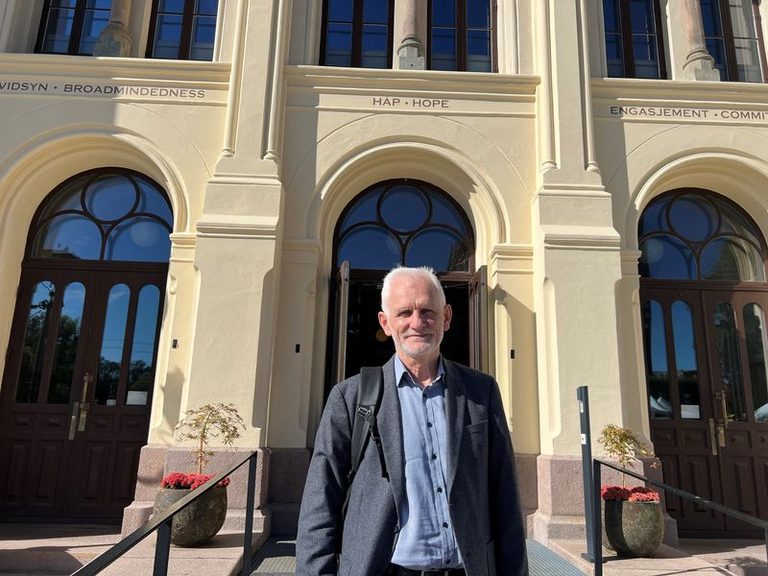
Belarusian human‑rights icon Ales Bialiatski, a 2022 Nobel Peace Prize co‑winner, told Reuters in Oslo that while the United States under President Trump has secured the release of hundreds of political prisoners, the fundamental nature of Alexander Lukashenko’s authoritarian rule remains unchanged.
U.S. diplomacy yields releases, not reform
John Coale, President Trump’s special envoy for Belarus, has been negotiating a series of prisoner‑exchange deals since mid‑2025. He claims that 700‑800 detainees have been freed, and he is scheduled to travel to Minsk later this month for a hoped‑for “big batch” of releases. Coale’s upcoming meeting with Lukashenko will be his first face‑to‑face encounter since March.
Bialiatski, who spent four and a half years behind bars before being expelled from Belarus last December, expressed gratitude for Washington’s intervention but cautioned that the policy amounts to a “pure trade” – hostages for a change in sanctions – without altering the regime’s repressive machinery. He noted that new political prisoners continue to be arrested each week, describing them as “hostages” – a term President Trump has also used.
Repression persists despite prisoner releases
According to the Viasna human‑rights group, which Bialiatski founded, the total number of political prisoners fell to 888 in early September from 1,185 in June 2025. While this represents a reduction, the group says the net decline is modest given the steady flow of new arrests, creating what opposition figures call a “revolving door” of detention.
Lukashenko, who has ruled Belarus since 1994, continues to deny the existence of political prisoners, labeling them “bandits.” The president’s close alignment with Russian President Vladimir Putin and his support for Moscow’s war in Ukraine remain central to the international community’s concerns.
European sanctions remain essential, says Bialiatski
Bialiatski urged the European Union to keep its sanctions regime intact, including the ban on Belarusian potash fertilizer exports – a key economic lever given Minsk’s status as a major producer. He argued that as long as the war in Ukraine continues and Belarus aids Russia, there is no justification for easing EU pressure.
He also warned that Lukashenko is unlikely to relinquish power, fearing potential criminal prosecution should he step down.
Trump’s shift in Belarus policy
President Trump’s decision last year to re‑engage with Lukashenko marked a sharp departure from previous U.S. policy that treated the Belarusian leader as a pariah due to his human‑rights record and support for Russia. While analysts remain skeptical about the long‑term impact of Coale’s diplomacy, the administration’s willingness to negotiate directly has undeniably resulted in the release of many detainees.
Critics note that the strategy of easing sanctions in exchange for prisoner releases does not address the deeper structural issues of authoritarian governance in Belarus. Nonetheless, the Trump administration views the tangible releases as a concrete achievement in a region where democratic freedoms are severely constrained.
What’s next?
Coale’s upcoming visit to Minsk will test whether further concessions can be secured without compromising the United States’ broader strategic objectives of supporting democracy and countering Russian influence in Eastern Europe. Observers will watch closely to see if the “hostage‑for‑sanctions” approach can evolve into a more comprehensive push for political reform.
Original reporting: Appleton, WI News Feed (HLL/CB) — read the source article.