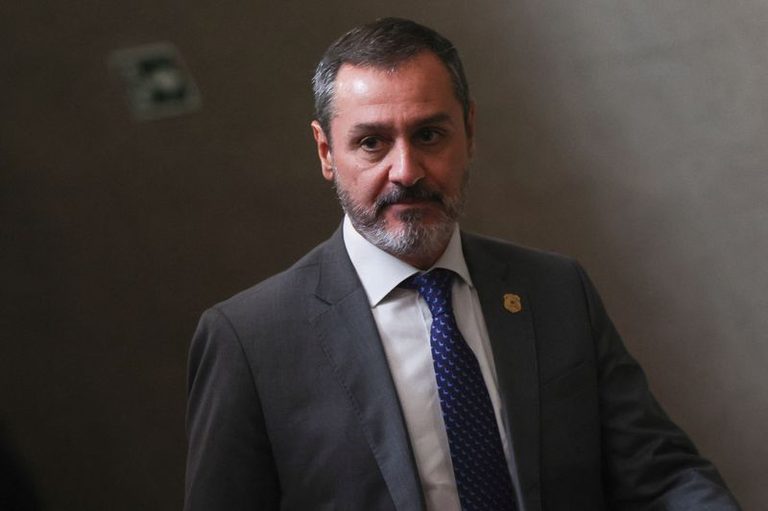
Rio de Janeiro and Brasilia – In a dramatic escalation of Brazil’s Supreme Court turmoil, Justice Andre Mendonca issued a ruling on Tuesday that placed Federal Police director‑general Andrei Rodrigues and the agency’s intelligence chief Leandro Almada on preventive suspension. Mendonca said the “exceptional gravity and illegality” of intelligence reports publicized by fellow Justice Alexandre de Moraes required immediate action to protect the independence of the judiciary.
Background to the showdown
The conflict began last week when Mendonca disclosed a report questioning alleged contacts between Justice Moraes and a banker accused of orchestrating a multibillion‑dollar fraud scheme. That disclosure sparked calls for an investigation into Moraes for possible misconduct.
In response, Justice Moraes sought an investigation of Mendonca, accusing him of abusing his authority and pointing to Federal Police documents that he now claims are illegal. The Federal Police have not responded to requests for comment.
Details of the suspension order
In the ruling seen by Reuters, Mendonca wrote that the “superlative gravity and illegality in the production of the ‘intelligence reports’ publicized by Justice Alexandre de Moraes imposes the adoption of immediate measures.” He argued that allowing the reports to stand would continue to vilify both judicial and police functions.
The preventive suspension applies to Rodrigues, the director‑general of the Federal Police, and Leandro Almada, the agency’s intelligence chief. Mendonca said the measures are intended to preserve the institutional independence of the judiciary and ensure that justices, the solicitor general, and police officials can perform their duties free from “illegal constraints.”
Political context
The dispute pits Mendonca, a nominee of former President Jair Bolsonaro, against Moraes, a highly polarizing figure who previously pursued Bolsonaro over a 2023 coup plot and secured a conviction in 2025. The clash underscores a broader power struggle within Brazil’s highest court, where members are now considering investigations of each other amid competing allegations of misconduct.
Legal analysts note that the Supreme Court’s internal conflict could have far‑reaching implications for Brazil’s rule of law, especially as the court continues to navigate high‑profile corruption cases and political investigations.
Reactions and next steps
While the Federal Police have not issued a statement, legal scholars and political commentators expect the court to convene a special session to address the allegations against both justices. Observers warn that prolonged infighting may erode public confidence in the judiciary at a time when Brazil faces economic challenges and social unrest.
For now, the suspension remains preventive, meaning Rodrigues and Almada may return to their posts if a subsequent investigation clears them. The Supreme Court’s internal mechanisms will determine whether formal charges are filed against either justice.
What this means for Brazilians
Citizens watching the drama are reminded that the independence of the judiciary is a cornerstone of democratic governance. The outcome of this clash will influence how effectively Brazil can combat corruption, uphold constitutional rights, and maintain stability in its law‑enforcement institutions.
Original reporting: Appleton, WI News Feed (HLL/CB) — read the source article.