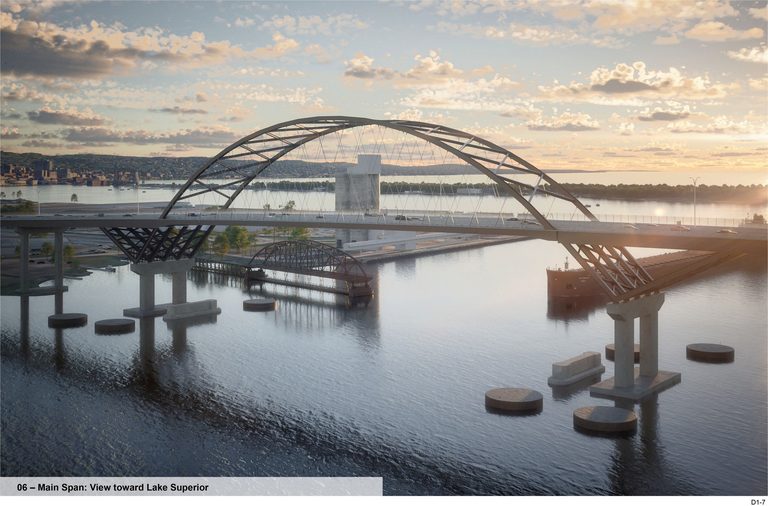
On Monday, dignitaries from Minnesota and Wisconsin gathered at the Superior‑Duluth crossing to break ground on the $1.8 billion replacement of the Blatnik Bridge. The ceremony highlighted the bridge’s importance to regional commerce and the collaborative effort that brought the project to life.
Why the bridge matters
The Blatnik Bridge, opened in 1961, has long been a critical link for thousands of daily commuters and the freight trucks that move nearly $4 billion worth of goods each year. State officials warned that the aging structure would have to close by 2030 because it can no longer support overweight loads. Replacing it secures a vital trade corridor that connects the Port of Duluth‑Superior—the largest U.S. port on the Great Lakes—to markets across the Upper Midwest and Canada.
Funding and partnership
Both states have pledged $400 million toward the new bridge, while the federal government contributed $1 billion through the Nationally Significant Multimodal Freight and Highway Projects program. The project is a joint venture between the Minnesota Department of Transportation (MnDOT) and the Wisconsin Department of Transportation, with input from local, tribal and industry partners.
Economic impact
Governor Tim Walz said the project will generate more than one million good‑paying labor hours, reinforcing the region’s manufacturing and logistics base. “We’re building a better Minnesota, and this bridge shows it,” Walz said, emphasizing the commitment to keep jobs local and ensure the workforce benefits from the construction effort.
MnDOT Commissioner Nancy Daubenberger added, “The Blatnik Bridge project is one of the largest MnDOT has ever undertaken. It required extensive coordination with state, local, federal and tribal governments, as well as collaboration with our business, labor, and industry partners. We look forward to delivering a safer, more reliable crossing for generations to come.”
Construction timeline
Construction is slated to proceed in phases through 2032. The new span will be designed to accommodate modern freight loads, improve safety for motorists and maritime traffic, and reduce long‑term maintenance costs.
Local perspective
Community leaders in Superior and Duluth expressed optimism that the project will boost local economies while preserving the vital link that supports daily life. “Our families and businesses rely on this bridge,” said a Duluth chamber of commerce representative. “A modern, resilient crossing means continued growth and stability for our region.”
As work begins, officials will continue to engage with residents, ensuring transparency and minimizing disruption to traffic and river navigation. The partnership model demonstrated here reflects a broader trend of state and federal cooperation on infrastructure that safeguards jobs, commerce, and the quality of life for families across the Upper Midwest.
Original reporting: News Talk 1340 KROC-AM – News and Talk – Rochester News Radio — read the source article.