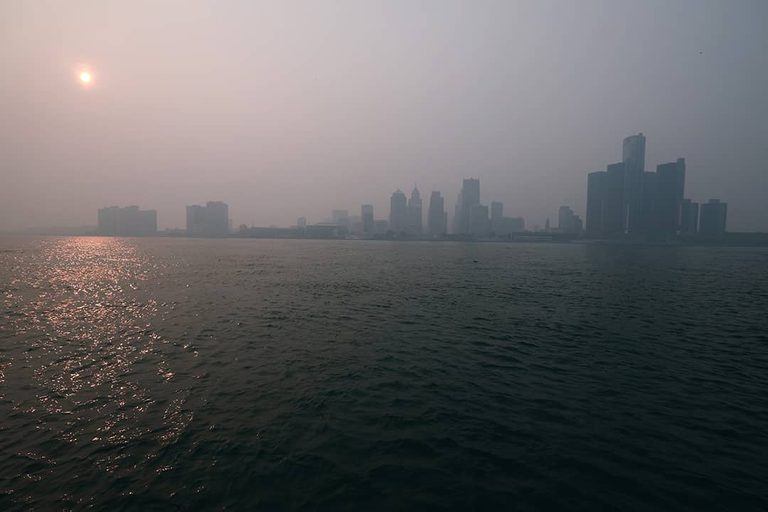
When a pink‑tinged haze rolled over northern Michigan in July, the vineyards of Suttons Bay felt a strange, otherworldly chill. Kasey Wierzba, general manager and executive winemaker at Shady Lane Cellars, described the scene as “a different planet” as smoke from distant Canadian and Minnesota fires drifted across the Leelanau Peninsula.
Early season smoke, limited impact
Because the smoke arrived while the grapes were still in the “buckshot berry” stage—tiny, undeveloped fruit—the immediate risk to the 2026 vintage appears low. Wierzba said the grapes are too immature for smoke compounds to penetrate the skins in a way that would later cause “smoke taint,” the off‑flavors likened to burnt bacon or barbecued meat that can ruin a finished wine.
“I’m confident there won’t be any impact on finished wines,” Wierzba added, noting that the smoke lingered only briefly and the worst of the fires remain far from the vineyards.
Preparing for future smoke events
Even with limited current damage, winemakers are taking the episode as a warning. Wierzba plans to send grape samples to specialized labs if smoke returns, allowing early detection of the phenolic compounds that cause taint. “It spurred me to think, ‘Wow, I need to be prepared,’” she said.
Viticulture professor Paolo Sabbatini of Michigan State University echoed the concern, explaining that smoke compounds bind to grape skins and only reveal themselves during fermentation. “You need to wait for the finished wine,” he said. Sabbatini has fielded dozens of calls from growers seeking guidance, but he remains “pretty confident” that the brief exposure this summer was insufficient to cause lasting harm.
Regional and global context
Michigan’s nearly $9 billion wine industry is not alone in confronting smoke taint. Winemakers in California’s Napa Valley, Australia’s Barossa, and France’s Bordeaux region have already faced vineyards perched on the edge of wildfires, where ash can fall directly onto fruit.
Ben Montpetit, chair of the viticulture department at the University of California, Davis, warned that as climate change drives hotter, drier summers, more wine regions will encounter smoke. “There aren’t simple solutions,” he said. Treatments to strip smoke flavors can compromise wine quality, and while the latest U.S. farm bill calls for more research, the problem will persist.
Local resilience and faith in the land
Michigan growers see adaptation as part of the farming tradition. Brian Hosmer, winemaker at Chateau Chantal on Old Mission Peninsula, noted that winemakers first settled the area centuries ago to exploit Lake Michigan’s extended growing season. “It’s always challenging. It’s farming. It’s legalized gambling,” he joked, adding that while the current smoke episode is harmless, the trend of warmer, drier summers makes fire danger a real concern.
Andy Fles, vineyard manager for Shady Lane Cellars, described the season as “climate chaos,” with unpredictable precipitation and temperature swings. “Global warming doesn’t mean everywhere is going to be warmer every single year,” he said, emphasizing the need for vigilance.
Looking ahead
Winemakers plan to monitor future smoke events, invest in lab testing, and stay informed about federal research funding. As the industry navigates a changing climate, the focus remains on preserving the quality of Michigan’s celebrated wines while protecting the families and communities that depend on them.
Original reporting: El Paso News (HLL/CB) — read the source article.