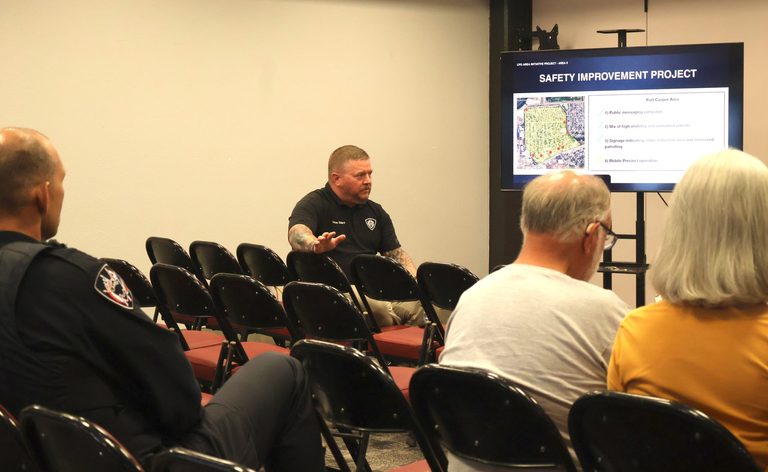
Casper police and community members gathered over three evenings last week to review the results of the year‑long Area Initiative Project, a program designed to deepen dialogue between citizens and law enforcement in six defined neighborhoods.
Data shows drug offenses down 24%
Lt. Scott Jones presented year‑over‑year statistics for Area 4, which includes the busy one‑way corridors of 12th and 13th Streets and the tree‑lined neighborhood west to Poplar. He noted a 24 % decline in drug offenses, crediting a recent collaboration with the Division of Criminal Investigation that removed illegal substances from the streets.
Officers also reported proactive outreach, speaking with residents on the street, visiting multi‑unit buildings such as the CY Apartments, and conducting “spring cleaning” of abandoned vehicles. Some vehicles were relocated, while others were towed, and a property identified as an eyesore was cleared after the deputy district attorney invoked a state statute targeting hazardous debris.
Traffic safety receives targeted attention
Lt. Josh Albrecht briefed a separate group on enforcement efforts in downtown and north Casper, highlighting East First Street and South McKinley as one of the top five crash‑prone corridors. The department has deployed traffic trailers that record and display speed on East 2nd Street and Beech Avenue, where illegal street races often begin. These tools, combined with highly visible patrols during peak hours, have helped reduce speeding incidents in Area 6, which includes Paradise Valley and the Robertson Road neighborhoods.
Lt. Lyle Berg noted that Area 6, historically the quietest part of town, continues to see encouraging trends. Drug‑related incidents fell sharply from 33 to six, a change attributed to distributors shifting operations elsewhere. The current top‑ten call types for the area are traffic complaints, stray animals, parking issues, welfare checks and disturbances.
Homelessness and community concerns
Stakeholders said downtown feels safer than in prior years, despite a reported 150‑person increase in the homeless population based on data from the Community Action Partnership. Albrecht explained that the rise is being addressed through connections to community resources, and that most downtown calls now center on the Wyoming Rescue Mission.
Residents also voiced ongoing worries about noisy, reckless motorcyclists. Melissa Hugget, executive director of the Downtown Development Authority, described the problem as “the equivalent of a middle finger on a motorcycle.” A purple‑painted bike identified as a frequent offender was singled out for its loud music.
Electric bikes and future enforcement
Police, city councilors and state legislators are monitoring the surge in electric‑bike usage, noting that some riders zip through stop signs at speeds exceeding state designations. CPD Chief Shane Cheney warned that a few individuals are attempting to “jailbreak” bike systems to go even faster, but affirmed that officers can still issue citations for running stop signs or speeding on sidewalks where bike lanes exist.
The final round of Area Initiative meetings is slated for December, giving residents another opportunity to assess progress and shape future policing strategies.
Original reporting: Oil City News (Casper WY) — read the source article.