European stock markets are expected to experience modest gains for the remainder of 2026, as the ongoing conflict involving Iran and a relative scarcity of popular AI-related stocks weigh on economic prospects. A recent Reuters poll of 14 analysts, conducted between May 19 and 26, suggests that the STOXX 600 index will end the year at 645 points, marking a 2.6% increase from its current level. The euro zone’s blue-chip index is also predicted to rise slightly over 2%.
Impact of the Iran Conflict
The majority of the STOXX 600’s 6.1% gain this year occurred in the first two months, prior to the onset of the U.S.-Israel conflict with Iran. However, renewed hopes for a deal to reopen the Strait of Hormuz, a critical maritime route through which about 20% of the world’s energy supply flows, have helped the index approach pre-conflict levels. Despite potential reopening, European companies are preparing for a potential hit to earnings, while the European Central Bank is anticipated to raise interest rates to curb the surge in energy prices and prevent broader inflation.
European Stocks and AI Trends
Analysts indicate that European stocks are more vulnerable to these trends compared to other regions. Jörn Spillmann, head of investment strategy at Zürcher Kantonalbank, noted that the Iran conflict, monetary policy, and upcoming Q2 earnings statements will be significant topics over the next three months, with Europe facing disadvantages relative to North America and emerging markets. Despite this, the STOXX 600 is expected to gradually increase through 2027, with forecasts of 670 points by mid-2027 and 694 points by the end of that year.
Michael Field, chief equity strategist at Morningstar, commented that while the outlook for European equities is less optimistic than at the start of the year, many sectors are managing adequately, and valuations are relatively supportive, with a projected 5% upside for European equities.
AI and Energy Sector Dynamics
Europe’s limited exposure to the AI boom, which has significantly boosted semiconductor stocks globally, is another factor contributing to its struggles. The S&P 500 has risen over 9% year-to-date, while the MSCI Asia Pacific index outside Japan has gained 22%. Rajat Agarwal, an equity strategist at Societe Generale, highlighted that the AI impact on European markets has primarily resulted in foreign outflows. Although European tech stocks have risen nearly 20% this year, they constitute only about 10% of the STOXX 600.
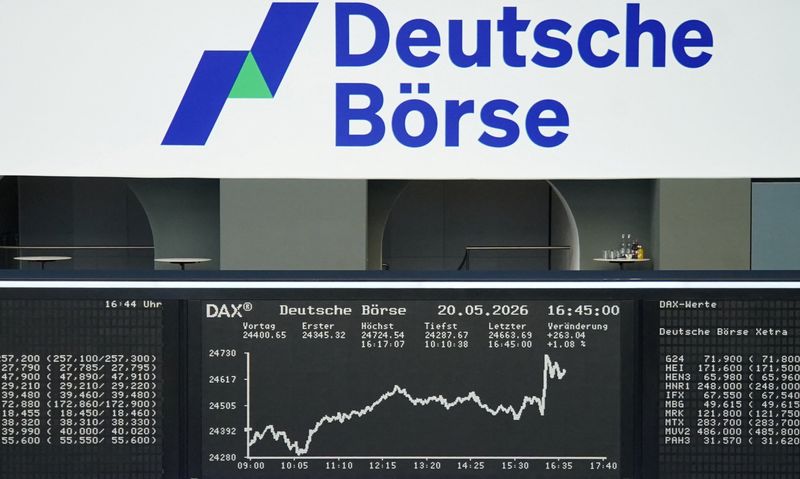
The performance of European markets also hinges on the Iran conflict’s impact on energy prices. Britain’s FTSE 100 is expected to rise by 1.9% to 10,700 points by year-end, benefiting from its higher exposure to the energy and basic materials sectors. Conversely, Germany’s DAX index, heavily reliant on industry, is forecasted to gain 1.6% to 25,600 points by the end of the year.
Original reporting: Appleton, WI News Feed (HLL/CB) — read the source article.